

I will be in Phuket for the entirety of the 2025 festival. You can follow me at @kippysnacks on IG for regular stories and updates about where and what to eat.
Prapaenee Tue Sin Gin Pak ประเพณีถือศีลกินผัก is the tradition of following the precepts of the Vegetarian Festival. More commonly referred to as taetsagon gin jay เทศกาลกินเจ (festival of eating jay), this is the annual Thailand Vegetarian Festival. In parts of the South, including Phuket, taetsagon gin pak เทศกาลกินผัก (festival of eating vegetables) is more common. A local told me off one year for calling it gin jay. "That's what it's called in Bangkok, but here we call it gin pak," they admonished me.
Jump to:
- When is the 2025 Phuket Vegetarian Festival?
- Top food locations in Phuket Town during the Vegetarian Festival
- Is all of the food vegan during the Phuket Vegetarian Festival?
- The Vegetarian Festival processions
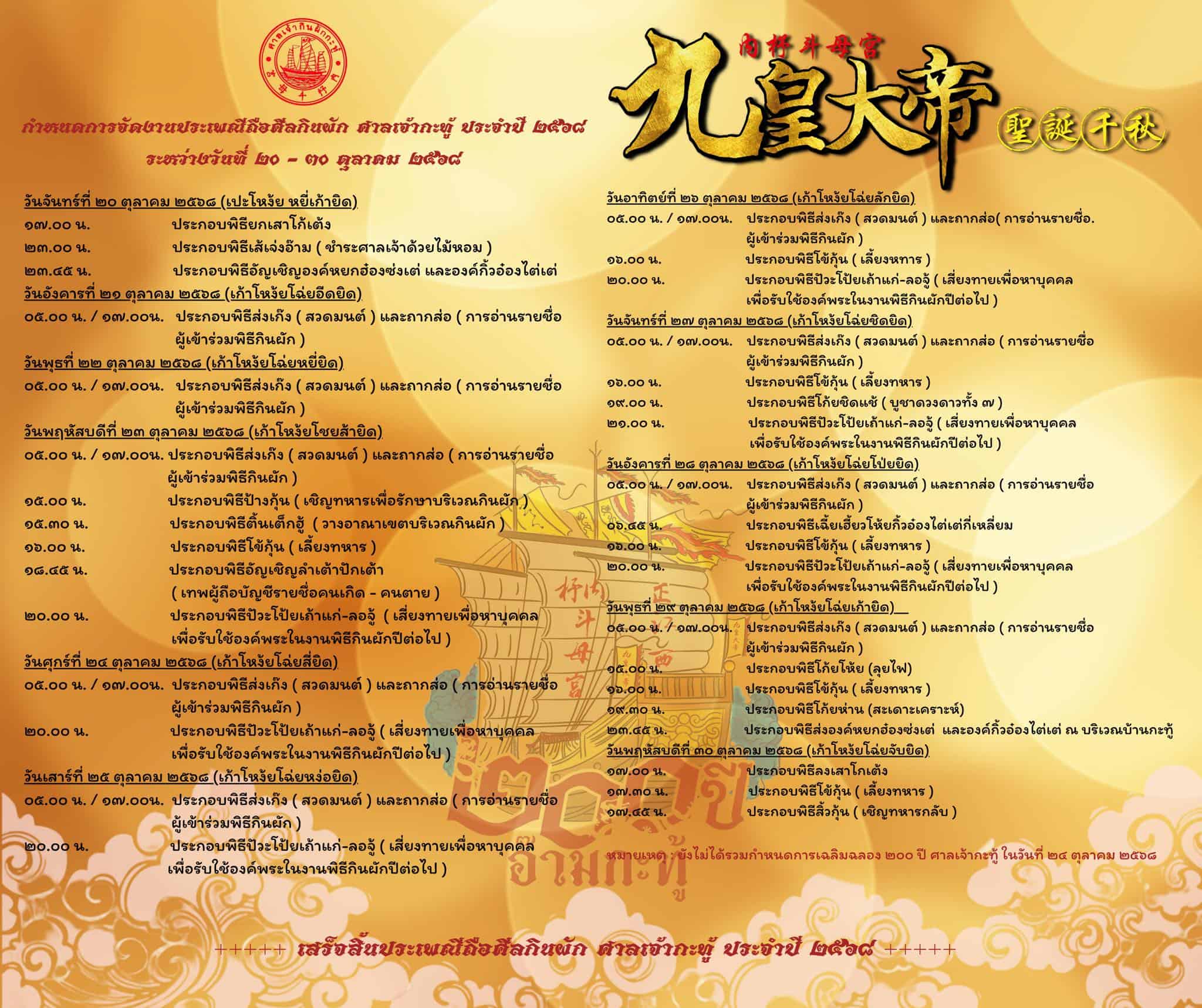
- Phuket Vegetarian Festival Schedule and other prominent rituals
- What to pack for the Phuket Vegetarian Festival
- Where to stay in Phuket for the vegetarian festival
I attend and research this festival every year, in addition to studying Thai language for the purpose of understanding food and culture, giving me a well informed perspective on the topic. Much of the English language Vegetarian Festival content available uncredibly disseminates parroted information that sometimes even borders on factually incorrect, such as wrongly calling this a vegan festival. In this piece I'll touch on this and other practical information with regards to the Vegetarian Festival in Phuket.
When is the 2025 Phuket Vegetarian Festival?
This year the dates for the festival are October 21-29. They will be similar throughout the country. Many special jay restaurant menus will be available for a few days either side of these dates.
Top food locations in Phuket Town during the Vegetarian Festival
As mentioned, since the festival is associated with Chinese shrines, that's where you'll find vast clusters of street food stalls. The two main shrines in Phuket Town are Jui Tui and Bang Neow. You can have a read of some of my favourite foods from the 2024 Phuket Vegetarian Festival for an idea of what to expect.
Jui Tui Shrine
In Phuket Town the largest collection of food vendors, ranging from street stalls to restaurants, is near Jui Tui Shrine, along Ranong Rd. The temporary vegetarian food market begins just past Ranong Main Market and stretches all the way up to Patiphat Rd. Past Patiphat, Big Bear Kitchen also generally has a lot of jay food for sale, including grilled banana leaf parcels with glutinous rice and various fillings. Keep going and you might find the odd snack at Cham Cha local market if it's early enough in the day. On Ranong, don't forget to turn down side streets, especially Soi Phuthorn. Jui Tui shrine is along this lane and food stalls stretch down to the shrine.

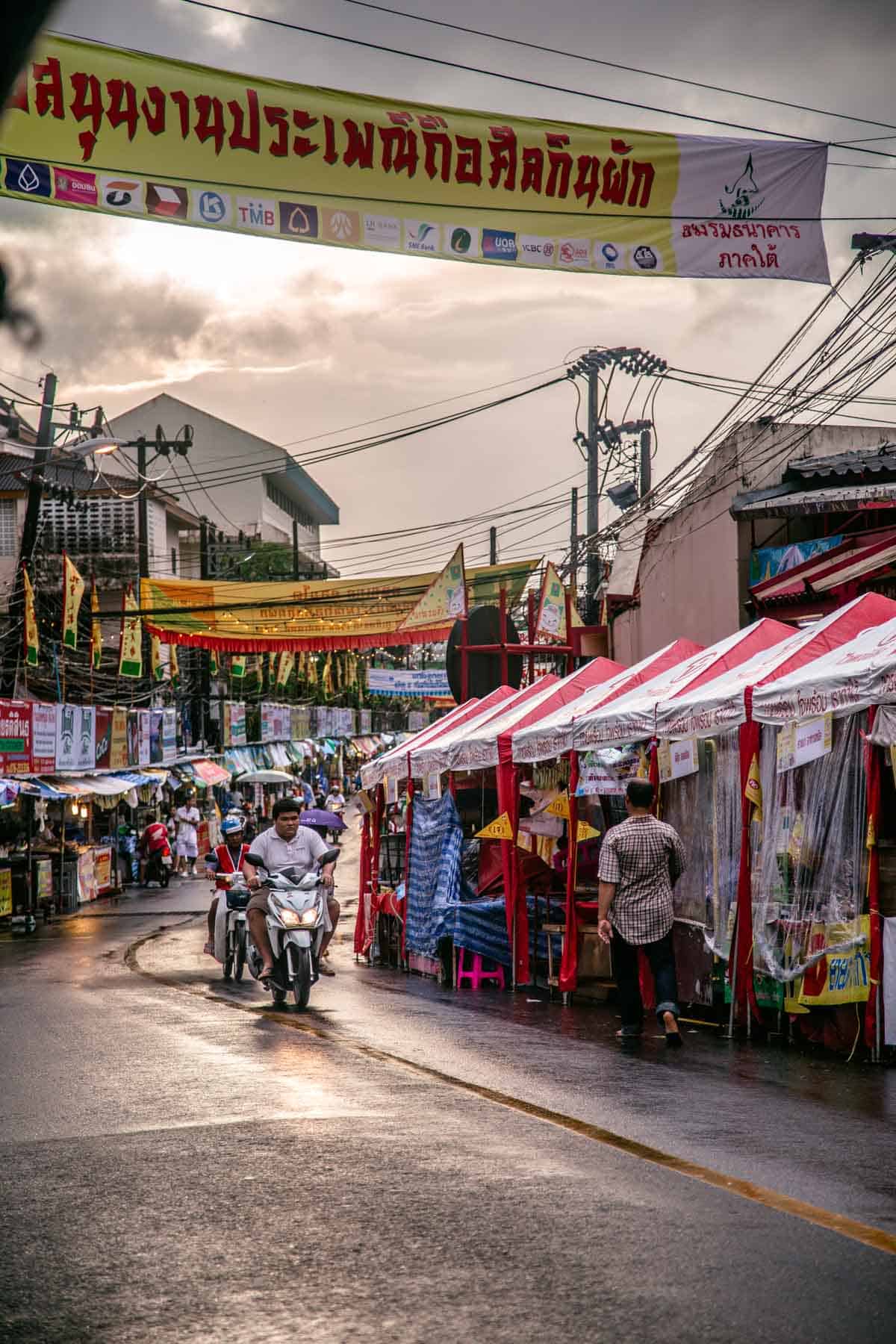
In the daytime the road is open to traffic, but there are no vehicles in the evening. Most stalls are open all day, with some variation between vendors (very little, but there are some who will borrow a stall for the morning to sell something different to what will be sold at the same location later in the afternoon or evening). Go out in the morning (early as possible) to find kanom see ka ขนมสี่ขา, Phuket's version of Chinese crullers.
Don't forget to walk both along the road and behind the vendors, along the pavements. Many of the bricks and mortar locations (including permanent jay restaurants) behind the stalls lining the road are also open and selling jay foods. If you want somewhere to sit down for a meal, this is your best bet.
Food is available from early morning until late at night.
Bang Neow Shrine
You'll also find a large collection of vegetarian food stalls and restaurants with vegan menus along Phuket Rd, just outside of Bang Neow Shrine. Many restaurants along this stretch also pack in their usually nonvegan menus for wholly plant based offerings during the festival. This area has a lot of great restaurants or pop up spaces with jay menus. Be sure to pop into Keng Tin, a traditional Phuketian sweets shop. Not all items are jay, but they can help you find the ones that are.
Around Phuket Town
Keep an eye on all restaurant menus because many will offer separate jay menus in the festival period. Larger hotels like the Pearl Hotel and Phuket Merlin Hotel often have great jay menus. Most make it very clear with external advertising or yellow and red flags with the jay เจ symbol, but not all.
Note that many of the permanent jay restaurants in Phuket Town close in the days following the festival. Staff are exhausted and need a rest (they're working almost around the clock while the festival is in action in order to keep up with demand). Some remain open.
Also of note: the Sunday walking street market along Thalang Road may have some vendors selling accidentally vegan foods, but it's a tourist market aimed at non locals. This market is not part of the festival.

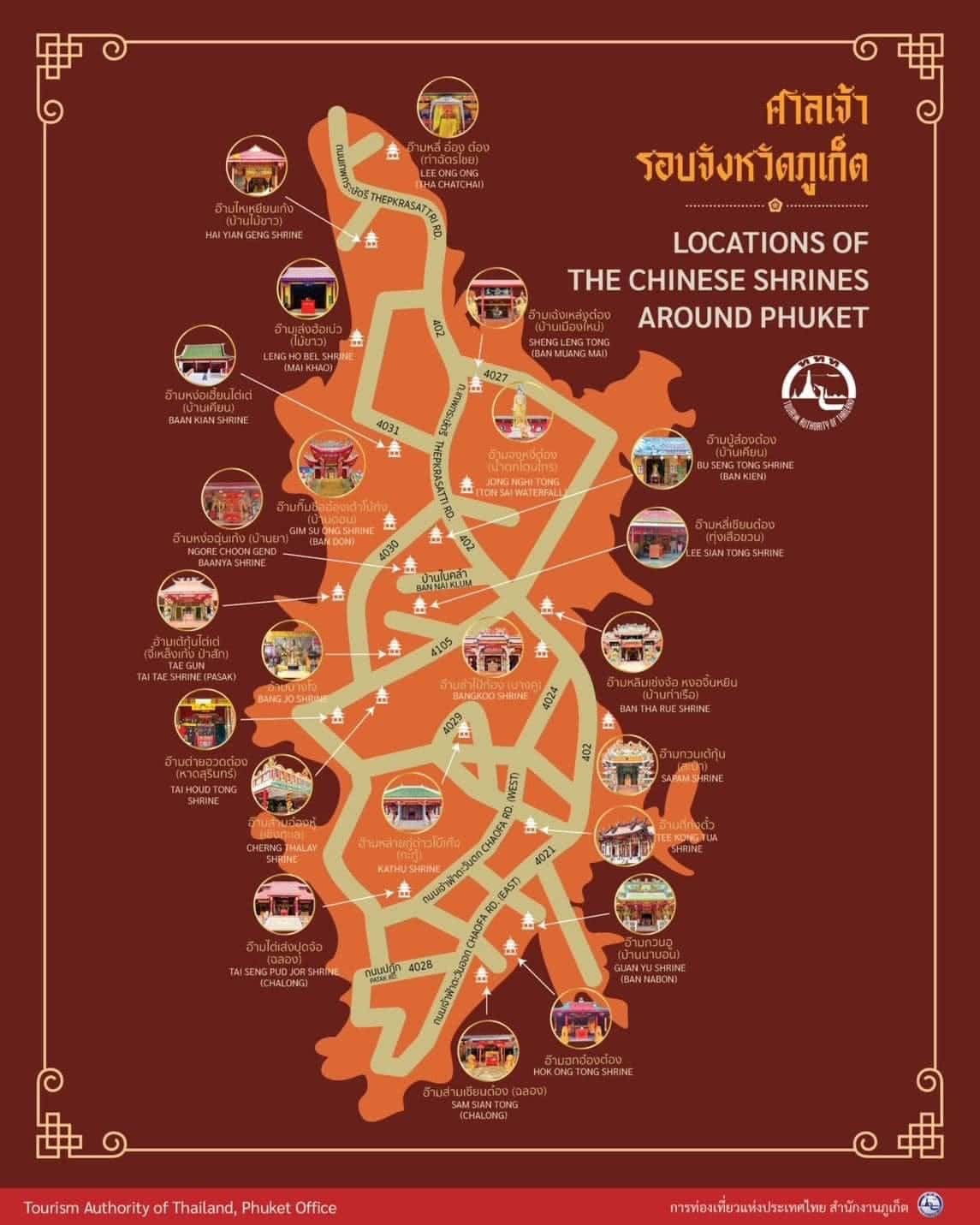
I have not visited all of Phuket's many shrines, but I am confident they will all have jay food options in their vicinity.
Is all of the food vegan during the Phuket Vegetarian Festival?
The short answer is no. For the long answer, read on.
Most of the food in festival specific locations is vegan, but not all. Jay food, by definition, should not contain meat or any ingredients sourced from animals, but this is a festival about people, not justice. Remember the festival isn't solely positioned as a food event; it's a spiritual practice centred around humans in which vegetarian food is component. It should then comes as no surprise there are some nonvegan products for sale. This is less of a concern in Bangkok, for whatever reason, but it's not too uncommon to find foods containing milk for sale in Phuket.
Be mindful of dairy milk at drinks vendors and sellers of Western foods (e.g. pizzas). Keep eyes open for stacks of cans of condensed and evaporated milks, most of which contain some English text. Some sweets vendors will top things with condensed milk. Last year I ordered a blended ice beverage with young coconut meat, something I'd always assume to be vegan given experience, but when I read the sign in Thai after ordering it clearly stated the inclusion of dairy milk. If you can't speak Thai, put your handy translate apps to work to double check. Every year, when I watch vegan tourist/influencer vlogs about the festival, I always spot at least one consuming items I'd wager contain dairy.
With Thai savoury foods served in festival locations you're safe. Again, it's drinks, desserts, and Western items that traditionally use dairy that you need to watch out for. Most Thai sweets sold in the festival are vegan, but I've come across the odd stall drizzling condensed milk on top of their wares. An example: in 2024, a stall selling Northern grilled purple glutinous rice pancakes with perilla seeds (khao buk nga ข้าวปุกงาขี้ม่อน) along Ranong Rd finished the pancake with sweetened condensed dairy milk.
That said, many vendors selling traditionally dairy heavy items do use vegan products. Case in point: I've seen and tried remarkable croissants and other Western pastries that I triple checked used vegan dairy alternatives.
Also be tangentially aware of honey. Drinks vendors who use honey will often make it clear on signs, presumeably because it's a premium ingredient. You're pretty safe with traditionally Thai sweets, with the exception of sundried bananas, which frequently contain honey as the sweetening agent.
Finally, it's extremely unlikely anyone trying to trick you by using dairy items. Again, and I know I'm a broken record, the festival is not rooted in animal rights ethics in any way, so in cases where dairy is used it's not because anyone is trying to dupe you for any reason. Like with most bodily purity practices, boundaries can be self-defined; the rights of other sentient Beings may or may not factor.
The Vegetarian Festival processions
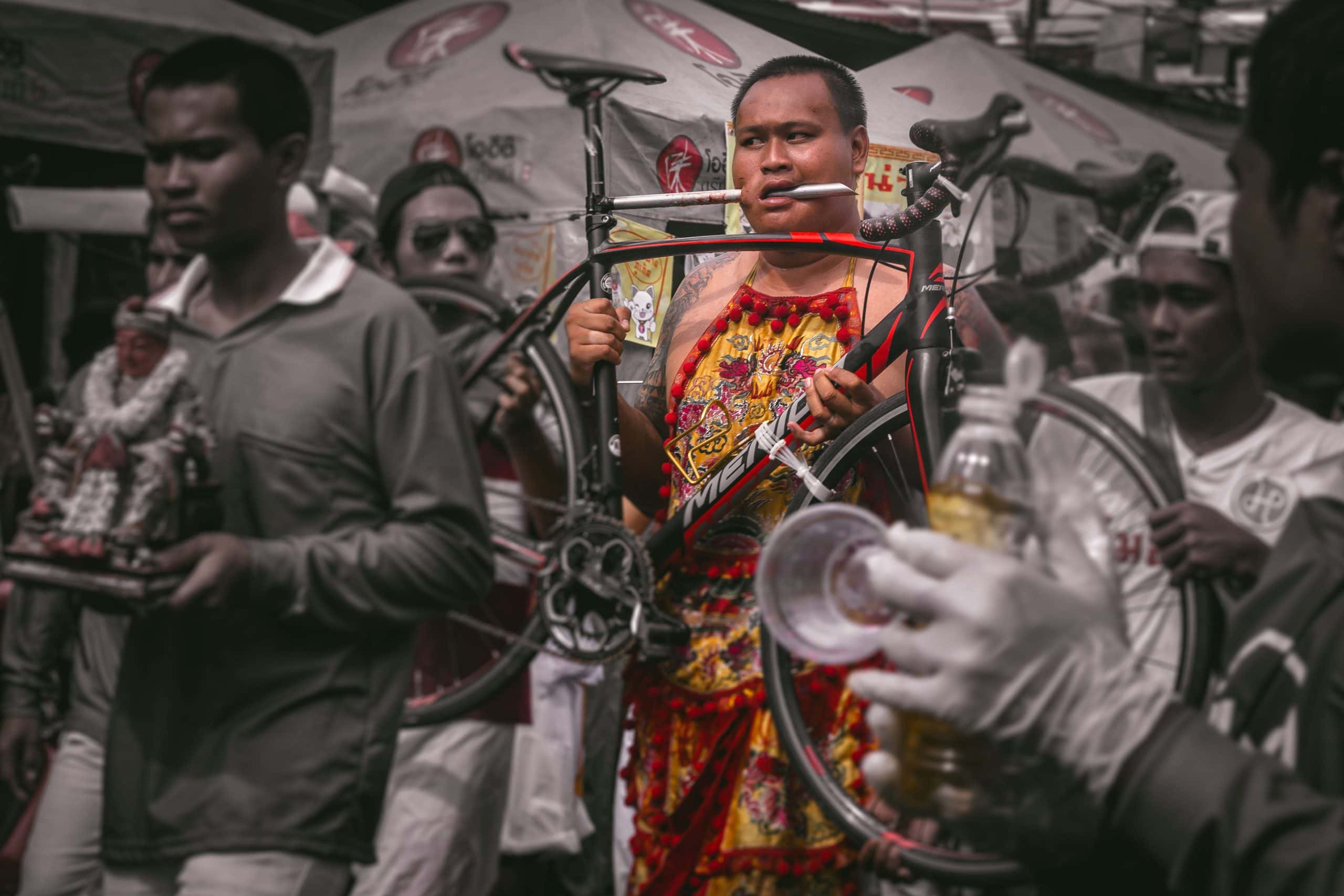
The processions (pi-tii iu geng พิธีอิ้วเก้ง or pi-tii hae pra พิธีแห่พระ) have become a defining symbol of the festival as a whole, drawing both domestic and foreign tourists, though many visitors remain unaware of the cultural meaning behind the rituals. The processions are primarily comprised of spirit mediums, or maa song, accompanied by their assistants, known as pi liang. I won't get into their significance here, but most of the maa song have facial piercings that range from small spikes to large swords and other objects. I once saw a maa song with a bicycle piercing their face.

Though firecrackers are thrown at the feet of the spirit mediums throughout, the passing of sedan chairs carrying statues of various gods toward the end of processions is where you'll see the lion's share of pyrotechnics.
Following the sedan chairs, someone will direct the public to crouch down or get onto their knees before the ceremonial umbrella of the Nine Emperor Gods passes. As soon as it passes, you can stand (or just watch the people around you and follow suit if you're not sure).
Please remember that even though you may not be aware of the significance of the traditions, it's a deeply important practice to many locals. Be polite and don't get in their way when they are seeking blessings and are praying. I'm speaking directly here to the Anglo spiritual squatters who centre themselves to occupy foreign sacred practices for clout and aesthetic. Also, don't get in people's way when they're swinging several feet of firecrackers above your head.
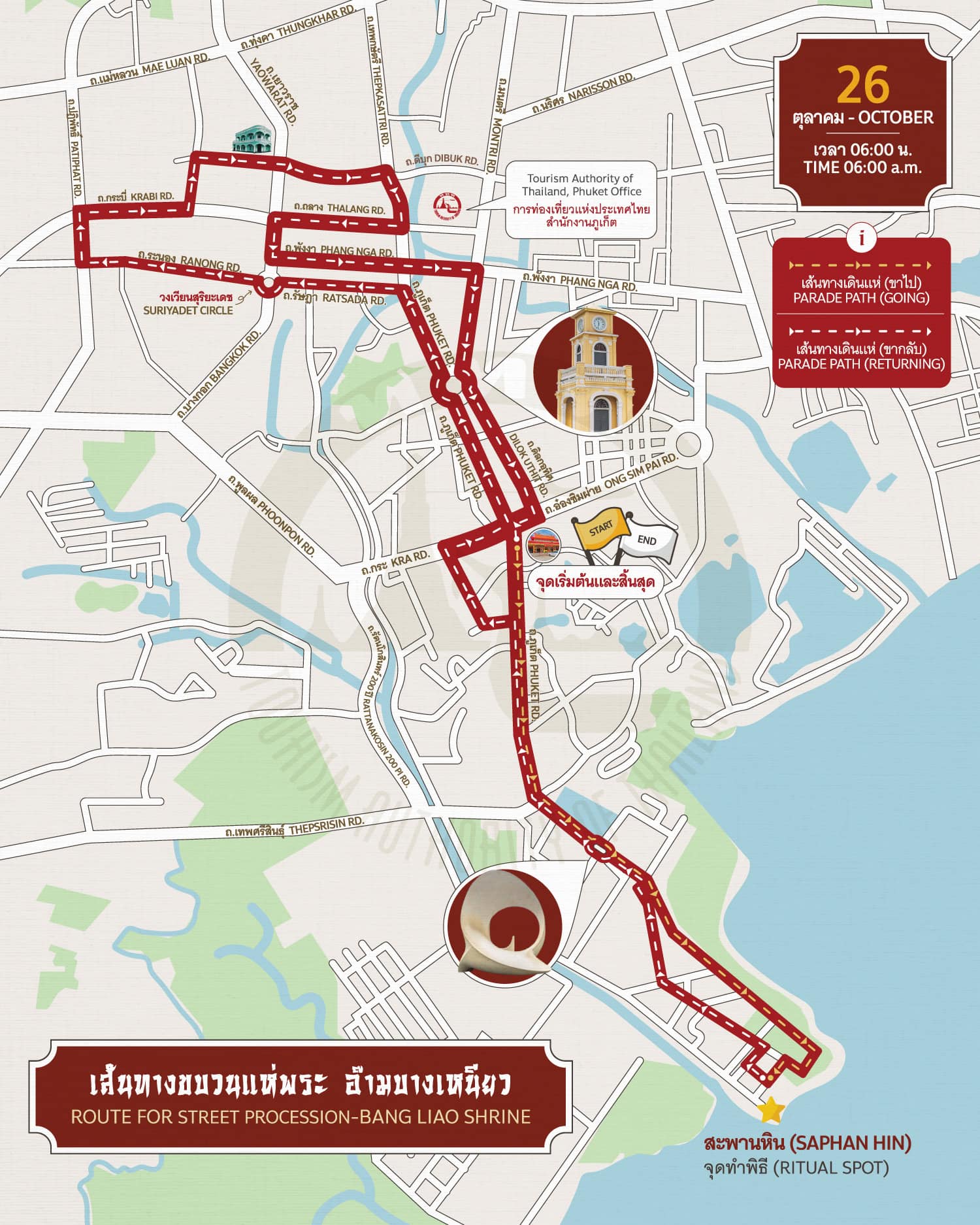
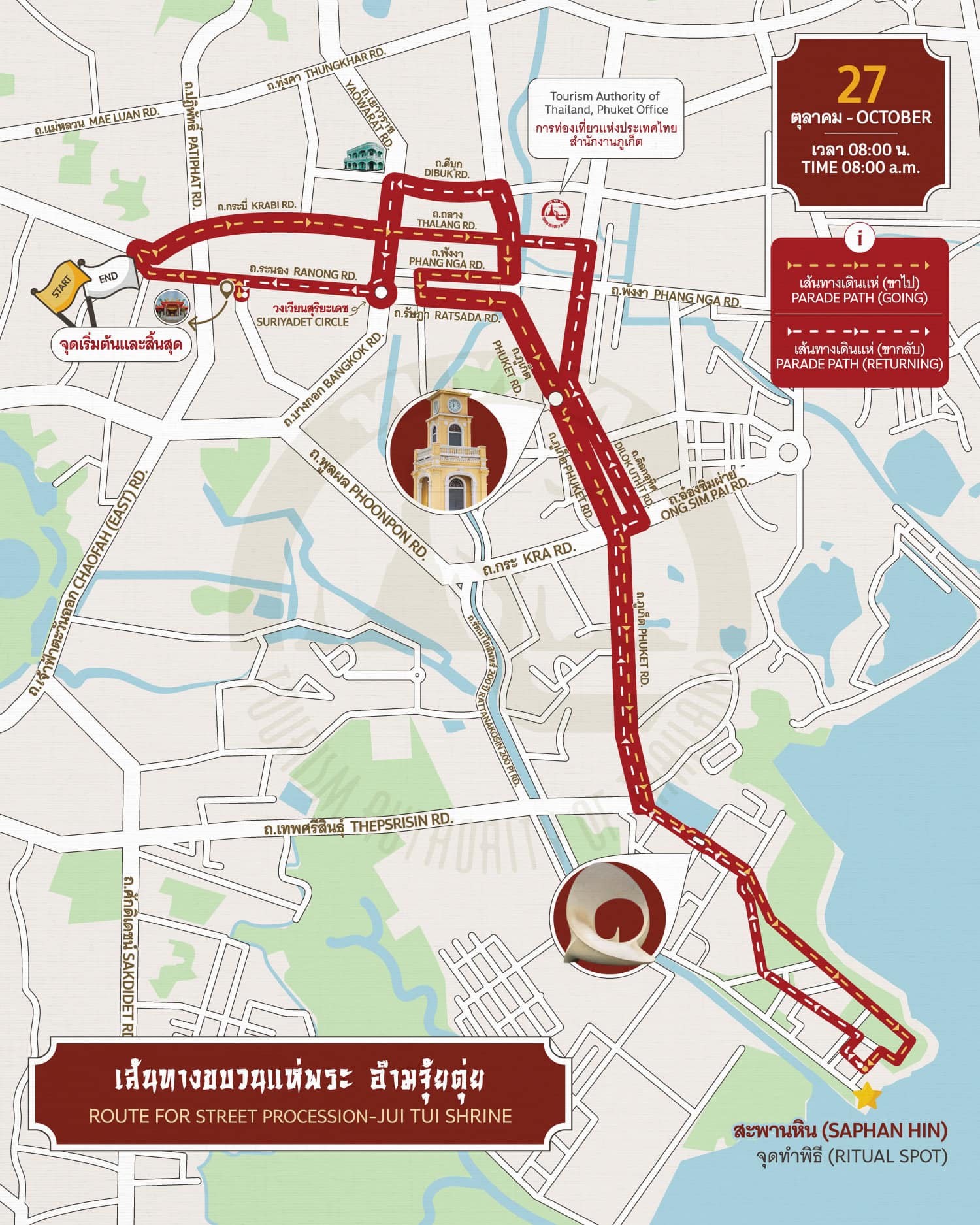
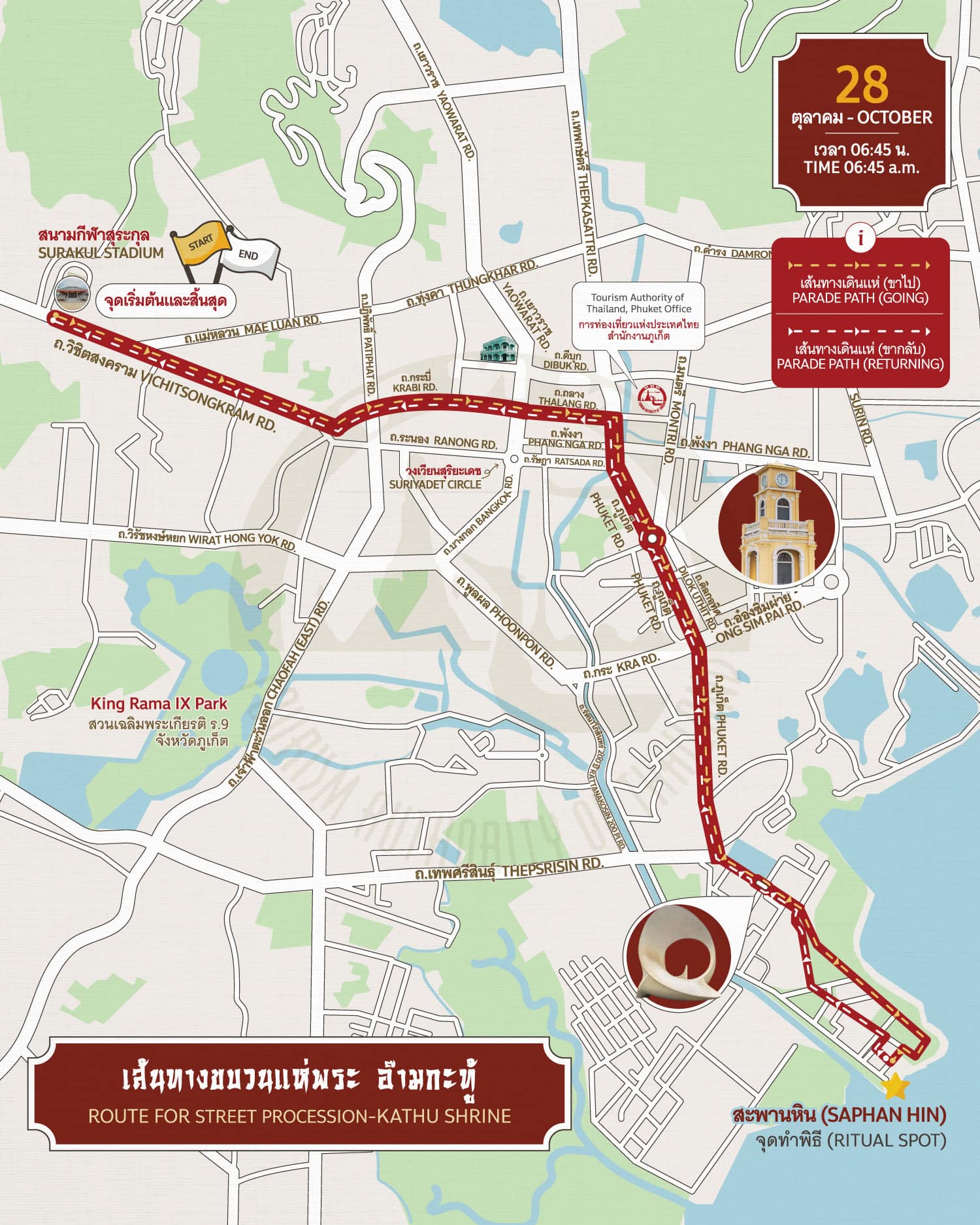
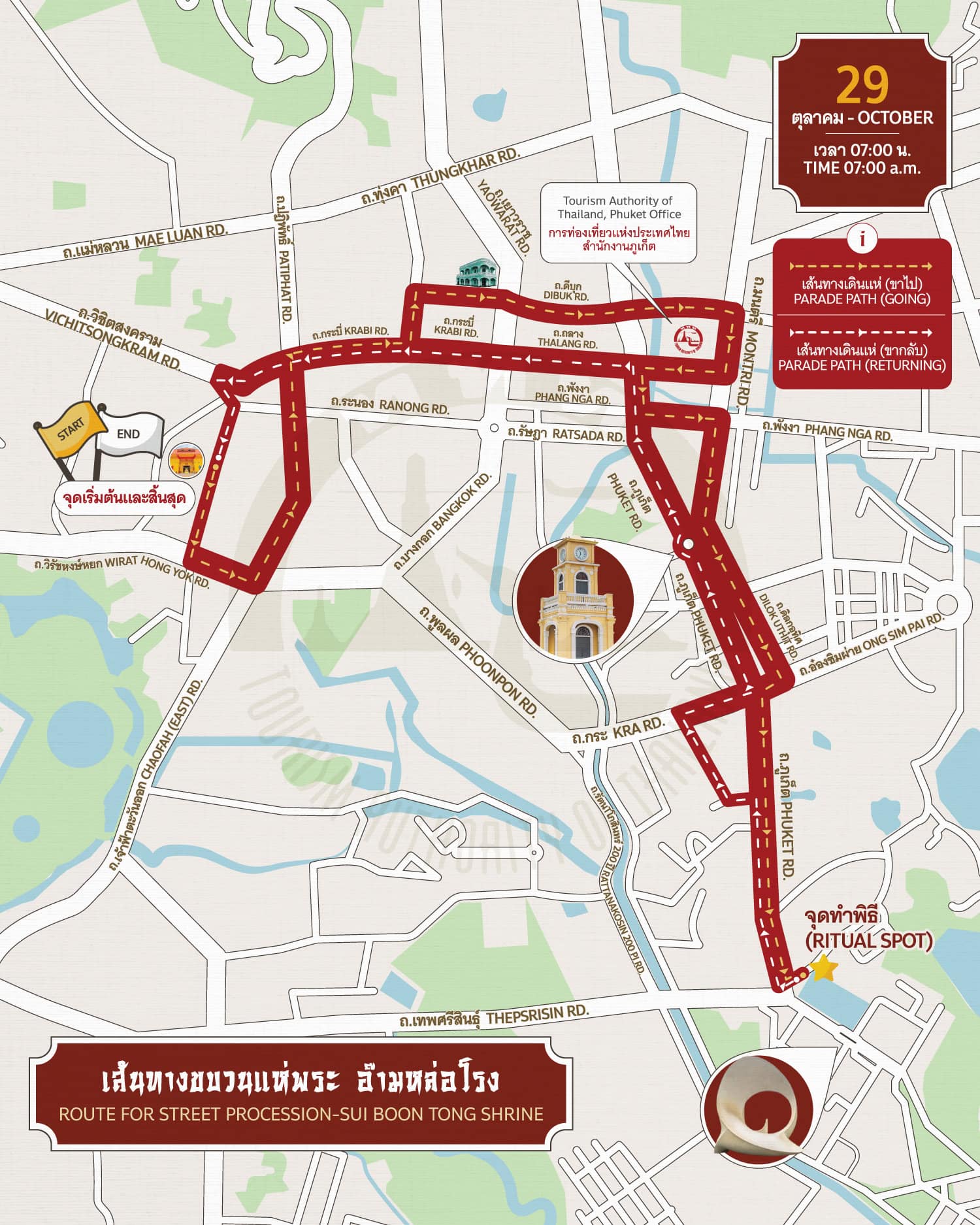
Each of the larger shrines on the island conduct their own procession during the week. These occur early in the morning, hence my suggestion further down this post to carefully consider where to book accommodation.
You might be given little trinkets, candies, and fruit by the spirit mediums. They'll come up to you and offer them or put them in your hands. Accept them graciously.
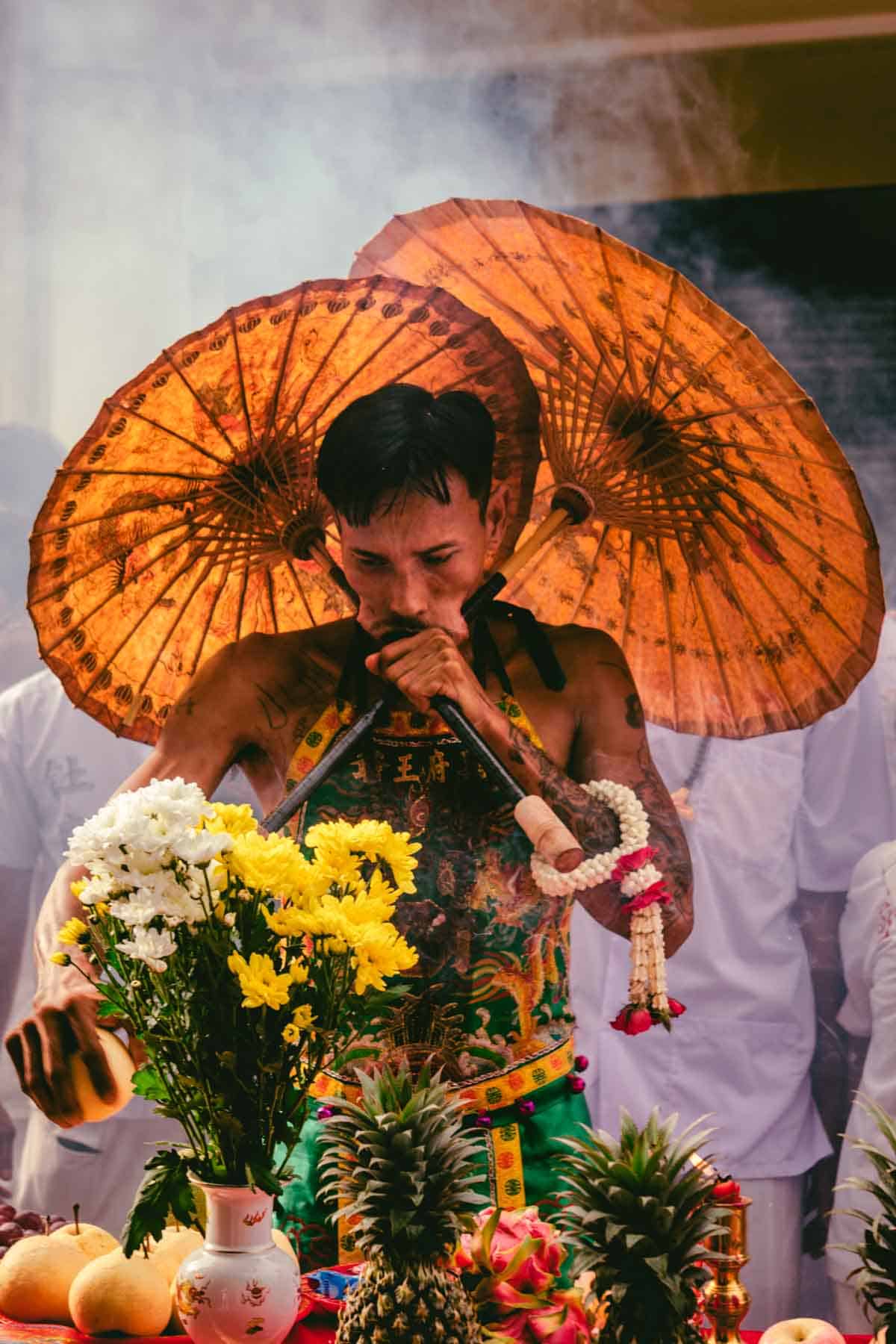
The processions begin a few days into the festival, so if you're only able to attend the event for a short period then my advice is to always aim for the last days, which is when the larger shrines' processions are always scheduled. If you're not interested in the rituals, which are admitedly not for the faint of heart (there's a not insignificant amount of facial piercings and associated blood and drool), then the starting days may be preferable (or afternoons and evenings, save for the very last night).
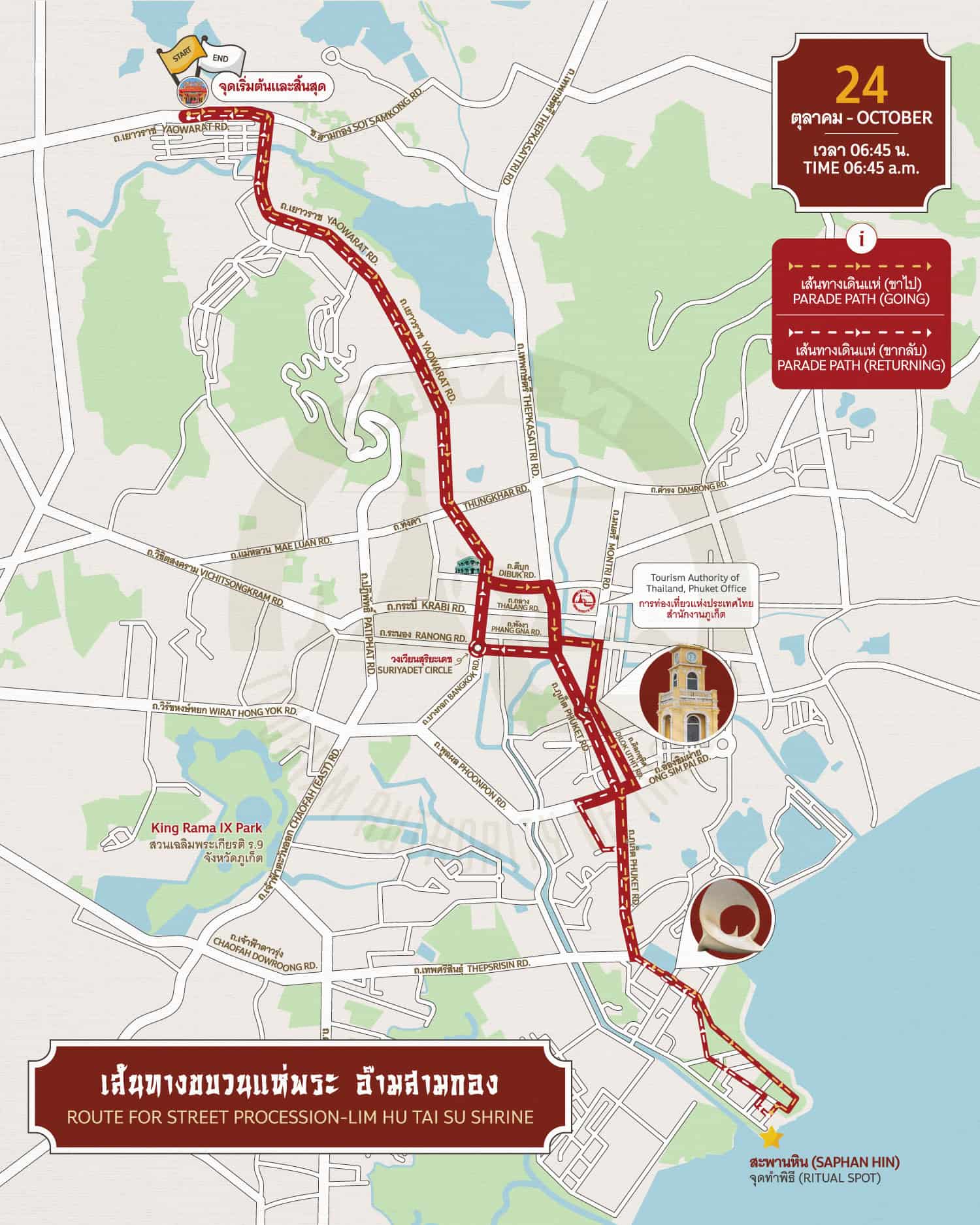
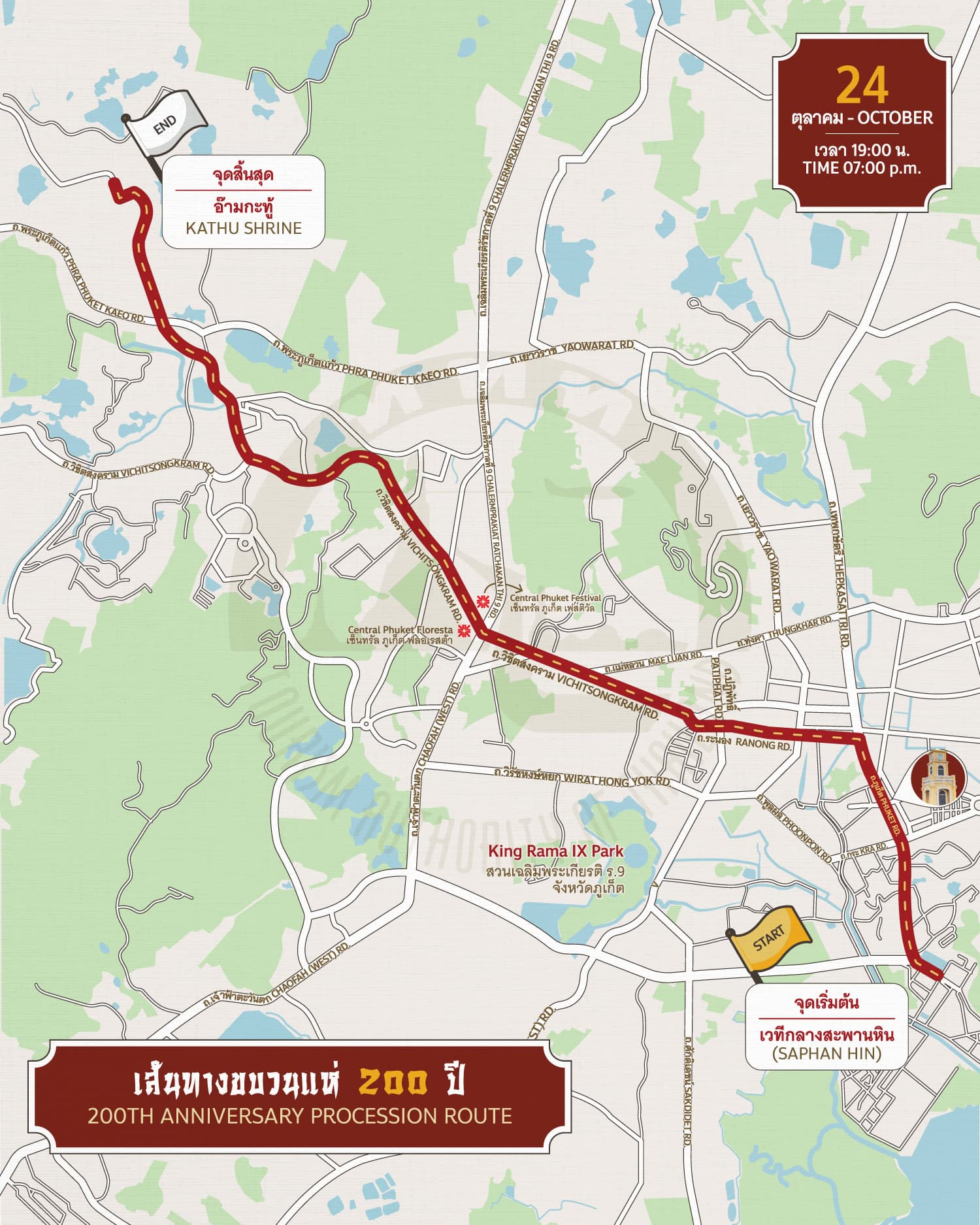
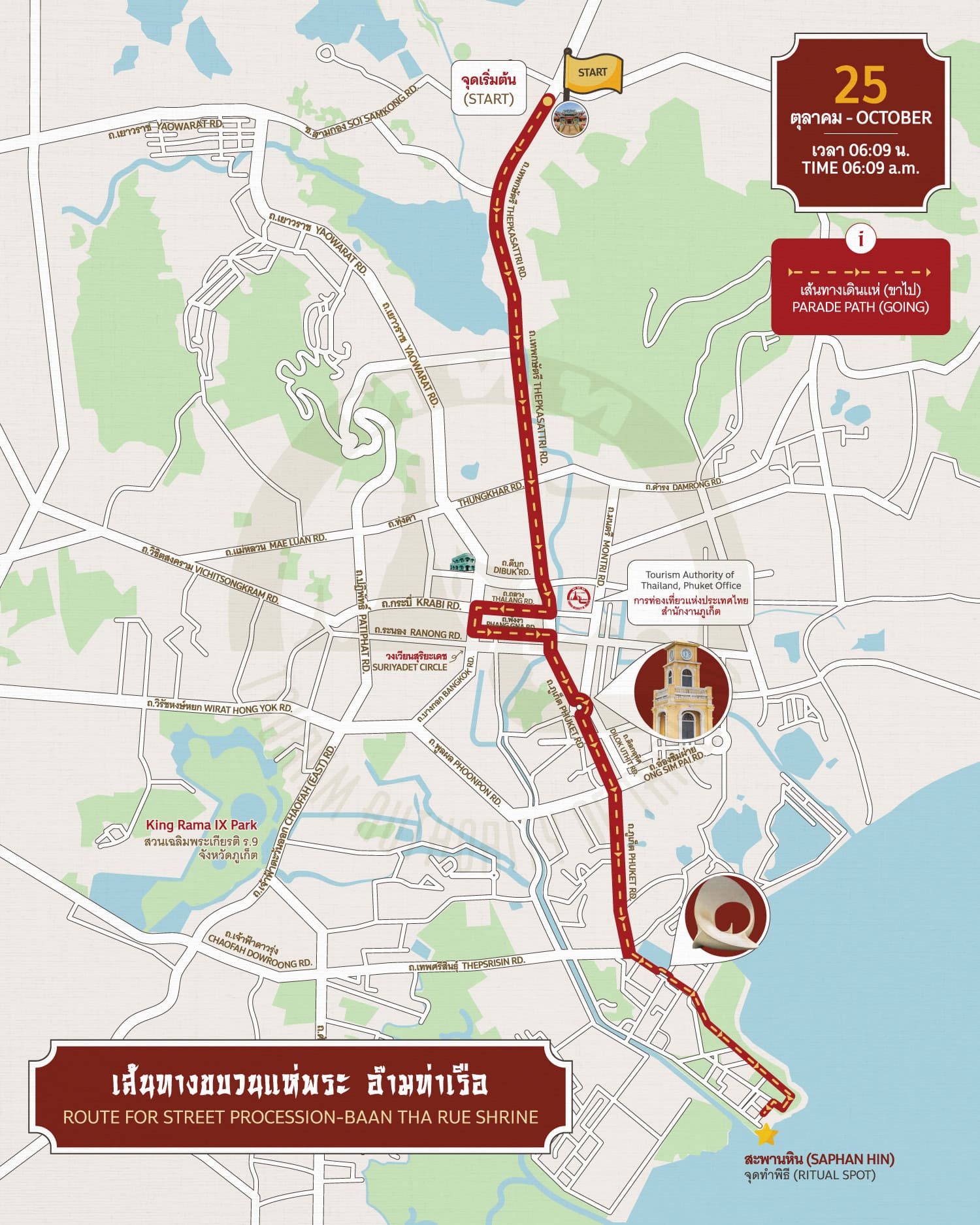
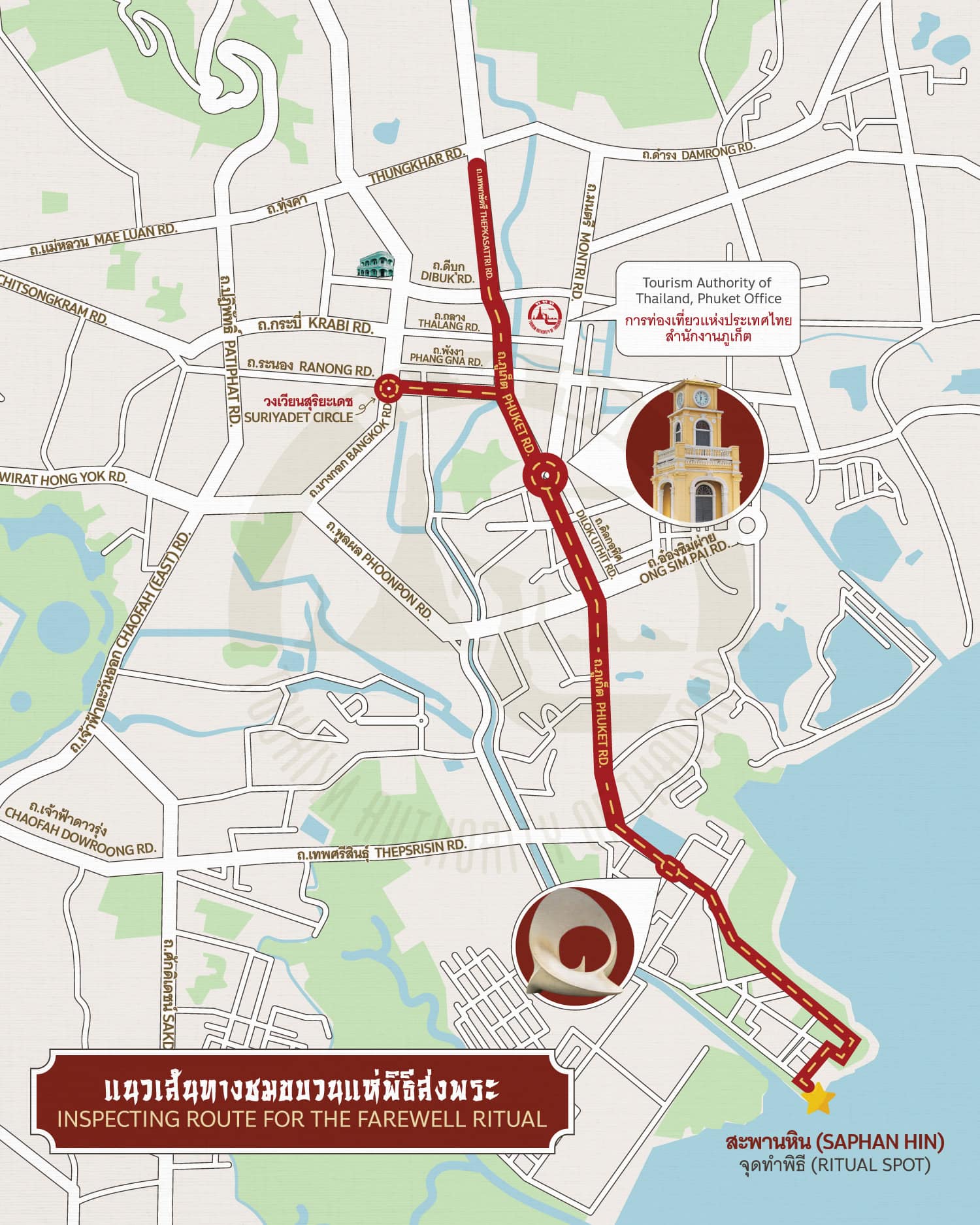
2025 Phuket Vegetarian Festival procession maps
The largest processions come from Kathu, Jui Tui, and Bang Neow shrines.

Tips for placement during the processions in Phuket
There's no perfect place to stand, but there are always some poor suckers who leave their cars parked on the streets during the processions. They make excellent barriers for when the sedan chairs pass through (AKA the biggest and boomiest segment of each procession). It means you have space either side to take photos and observe with no obstructions, but also have something substantial to quickly duck behind when there are suddenly hundreds of firecrackers exploding in the air around you.
If you're staying in a hotel along the procession route, you can also use them as place to dart back inside. Larger heritage hotels like Memory at On On have a very large reception area where you can jump inside for a rest or protection.
A lot happens at intersections, which are considered auspicious spaces in Thai culture. This is where you'll see the spirit mediums stop and do axe swinging rituals, during which they swing the blades against the skin on their backs.
Phuket Vegetarian Festival Schedule and other prominent rituals
Here I'll write a little bit more about the general schedule and other popular rituals during the Jay Festival in Phuket.
The 2025 Vegetarian Festival schedule below includes the procession times, as well as timings and locations of the very popular fire-walking ritual (pi-tii goi hoi พิธีโก้ยโห้ย or pi-tii lui fai พิธีลุยไฟ). They've also provided timings for the ceremonial bridge crossing ritual (pii-tii goi han พิธีโก้ยห่าน or pii-ti sador kra พิธีสะเดาะเคราะห์), a ceremony that represents a journey into a new life after crossing a small red bridge (there's a lot more going on than this, but for the sake of time and space I will save that for another day).

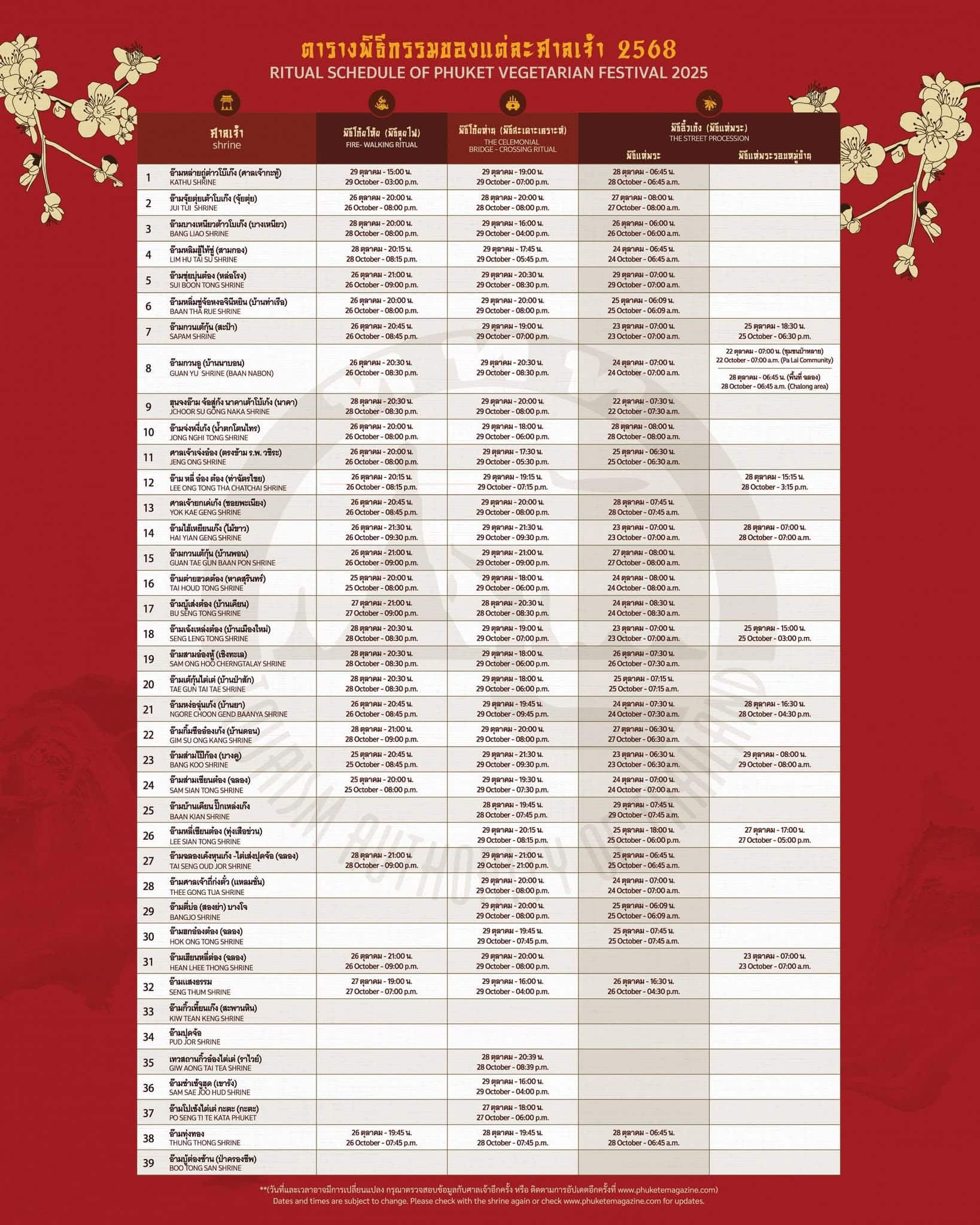
The evening before the formal start date, there are ceremonies at each shrine to raise the tall lantern poles and to invite the Nine Emporer Gods and the Jade Emperor. They are, after all, the guests of honour and the core of the festival (perhaps at some point I will write more on this). The Tall Lantern Pole Raising ceremonies (pi-tii kun sao go teng พิธีขึ้นเสาโกเต้ง) occur at each shrine.
On the last night, all of the shrines have a ritual to send off the Jade Emperor. I usually plant myself at Bang Niaw because the yard is large so there's plenty of room. It's also that much closer to Saphan Hin, to which all of the shrines depart with processions after the ceremony, in order to bid farewell to the Nine Emperor Gods.
The Nine Emperor Gods are sent off to sea at Saphan Hin, so every shrine has a procession culminating here on the last night. The processions include various symbolic objects associated with with Nine Emperor Gods, sedan chairs holding representations of other gods, and spirit mediums. In other words it's a big procession for all of the shrines, and they're all heading to the same place, so it's an e-v-e-n-t. Thousands of people are around for picnics, though few actually go to the beach itself for the sending off rituals.
After the Gods are sent off to sea, the processions return back to town, including the sedan chairs and spirit mediums. Some of them come out of their trance at the seaside, exhausted and presumeably finished with their role for the year.
Keep in mind the quickest walking route from the centre of town to Saphan Hin is usually via Phuket Rd. This is also the route the processions take, so it's a very busy and literally explosive route. By 21:30 or so the road will be pretty packed. If you're walking you may wish to look at other options unless you are comfortable dodging fireworks. I walk the Phuket Road route annually, usually following alongside the Bang Neow procession. Below is a view of this road at 22:40 on the last night.

Saphan Hin isn't a must unless you really want to observe the final rituals. If you're there for the fireworks and processions then you'll get just as much enjoyment anywhere in town along the procession route. The Surin Circle Clock Tower roundabout is my favourite location on the final night if I'm staying in town. If you do go to Saphan Hin and want to observe all of the processions and rituals until the end, be prepared to not make it back to your hotel until around 2am. I've been out until nearly 3 some years. The return processions back to the shrines are lengthy and the fireworks are extremely amped up on the roads at this time. I usually head to somehere around this intersection to watch the returning processions before walking back to my hotel in town. By this point you've got to be vigilant enough standing in one place, so I don't try to move too much.
Below is a video of the aforementioned intersection at 01:00, still going strong. Note the low visibility from the sulfurous firework smoke. Get the best mask you can.

The day after the festival, there's a pole lowering ceremony at the shrines. If you're around it's interesting to attend, watching locals grasp for twigs and gold leaf from the pole and horizontally suspended branch as they are lowered.
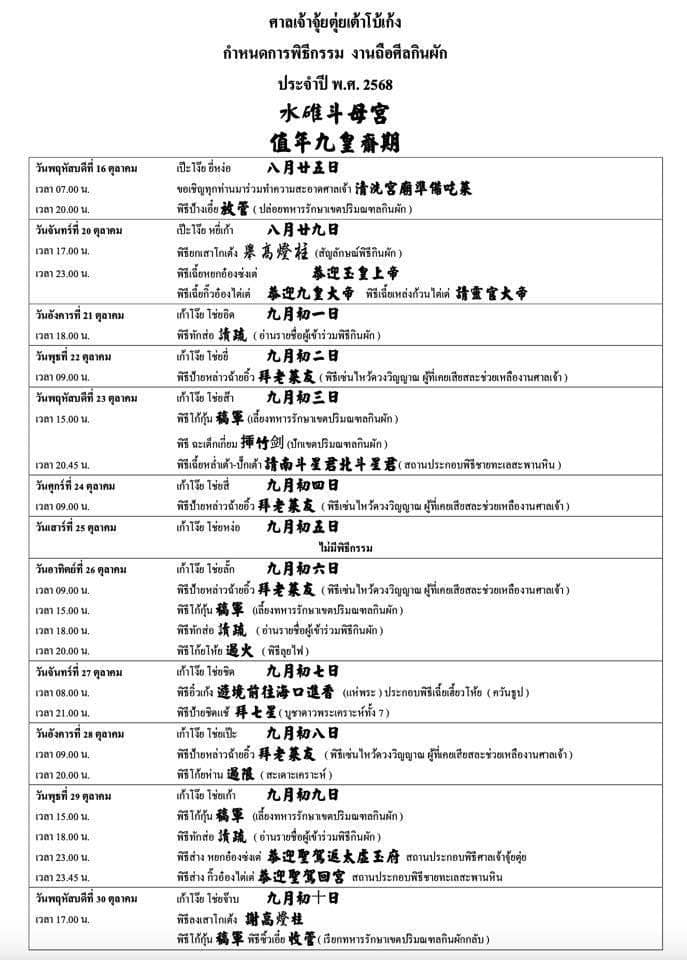
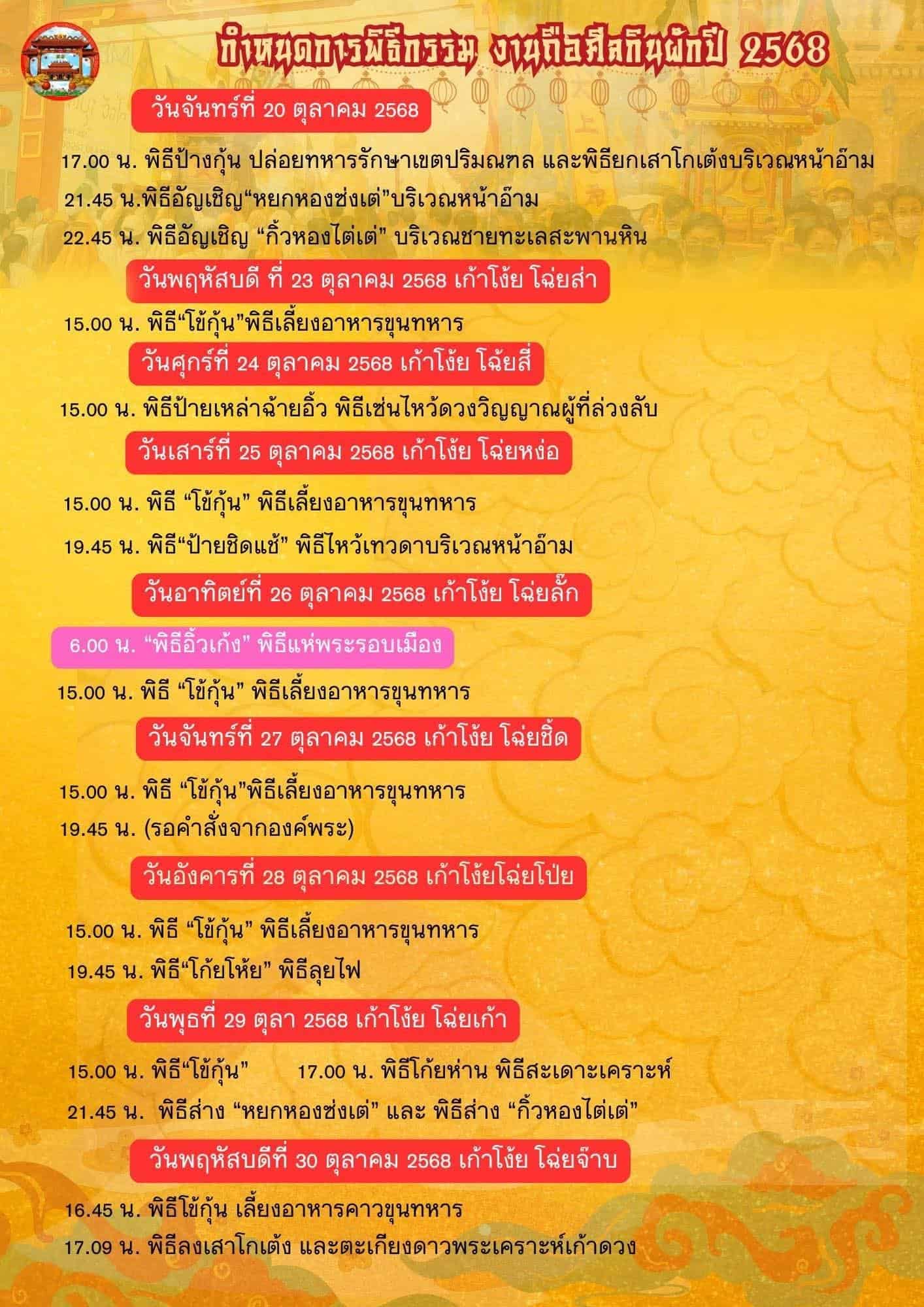
There are also schedules specific to individuals shrines for the many other ceremonies, such as the schedule for Jui Tui, Bang Neow, and Kathu shrines (only in Thai, sorry).
What to pack for the Phuket Vegetarian Festival
This might sound like overkill, but if you're not familiar with the order of the processions then it's difficult to know when to hunker down and get out of the way of fireworks and deafening booms. And even if you do know, there's no planning for people of all ages lighting, throwing, and waving long strings of firecrackers all around you. Children and adults alike, many with poor aim, will be tossing firecrackers all around you. And on the last night people will also be setting off massive rocket fireworks randomly on the streets. The sounds and smells can be extremely overwhelming and even dangerous. This is why recommend packing the following:
- Earplugs and/or ear defenders. You'll also be able to buy cheap foam earplugs locally. This isn't like Guy Fawkes, the 4th of July, or New Year's Eve where there's a carefully orchestrated show at a distance or a few minutes of your neighbours sending up fireworks. It's prolonged and can be at extremely close range. I've had firecrackers explode inches from my face and people plop and light massive aerial fireworks tubes at my feet.
- Fabric and paper face masks. The acrid smoke from all the fireworks, especially on the final night, makes breathing a less than pleasant experience. A single paper mask isn't enough for me, so I always wear a fabric mask over top. With this there's still a whole lot of coughing. Paper masks are easily purchased in convenience stores. I always pack Uniqlo Airism masks for the second layer.

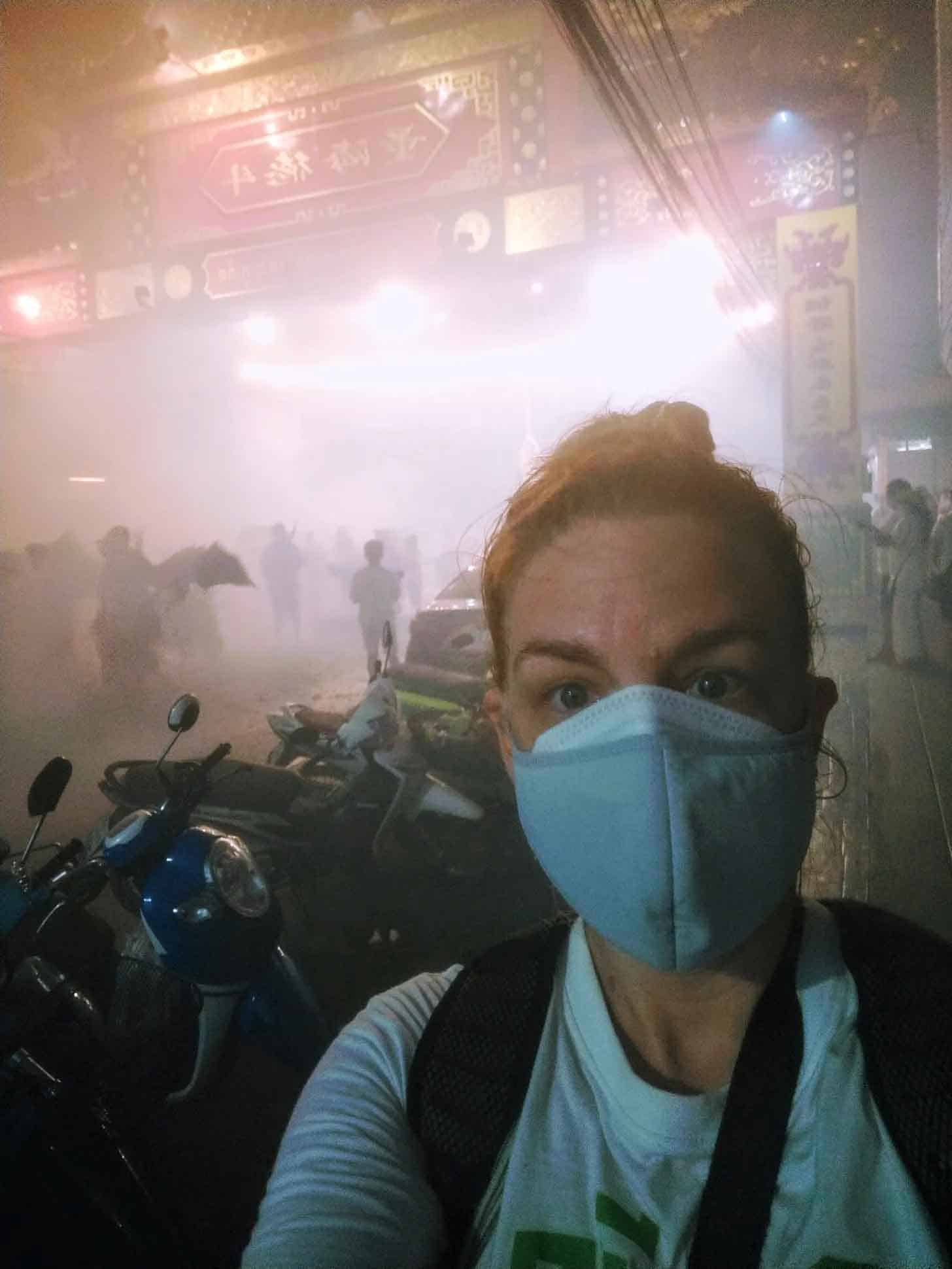
- Eye protection. With all the errant fireworks I recommend something to protect your eyes. Some people have proper goggles. Large glasses are a bare minimum. Try to find large clear glasses for at night.
- Closed toe shoes and long trousers (or a long dress). Fireworks are intentionally thrown at the feet of the maa song (spirit mediums) during the processions, and some of them pop off and slam into your feet and legs. I've never had a major injury, but definitely some bruises.
All of that said, I'm perpetually impressed by the close range at which firecrackers can go off without causing great injury.
You may also wish to pack white clothing, which all festival participants wear (many vendors will have cheap fisherman style white trousers and t shirts for sale so you can also buy locally). I've been told by locals it's considered polite to wear white when visiting shrines and to avoid black. That said, I regularly see individuals visiting shrines in various different types of clothing.
Where to stay in Phuket for the vegetarian festival
While the festival takes place across the island, you're not going to find much action around the beaches. Fortunately public transport on Phuket is improving and you can always use the Grab or Bolt apps (both similar to Uber) to find transport into town if there are no taxis available from your beach resort, if that's where you're staying.
My recommendation for accommodation in Phuket Town comes down to whether or not you want to be on procession routes, where the action is on your doorstep, or you want to be somewhere quiet where you can sleep in past 07:00 on procession days. Both have their advantages. A room with a balcony along a procession route can be a lot of fun.
Below is a combined processions route map from 2024. The routes don't really change from year to year, so you can use it as an idea of where you may or may not with to stay.

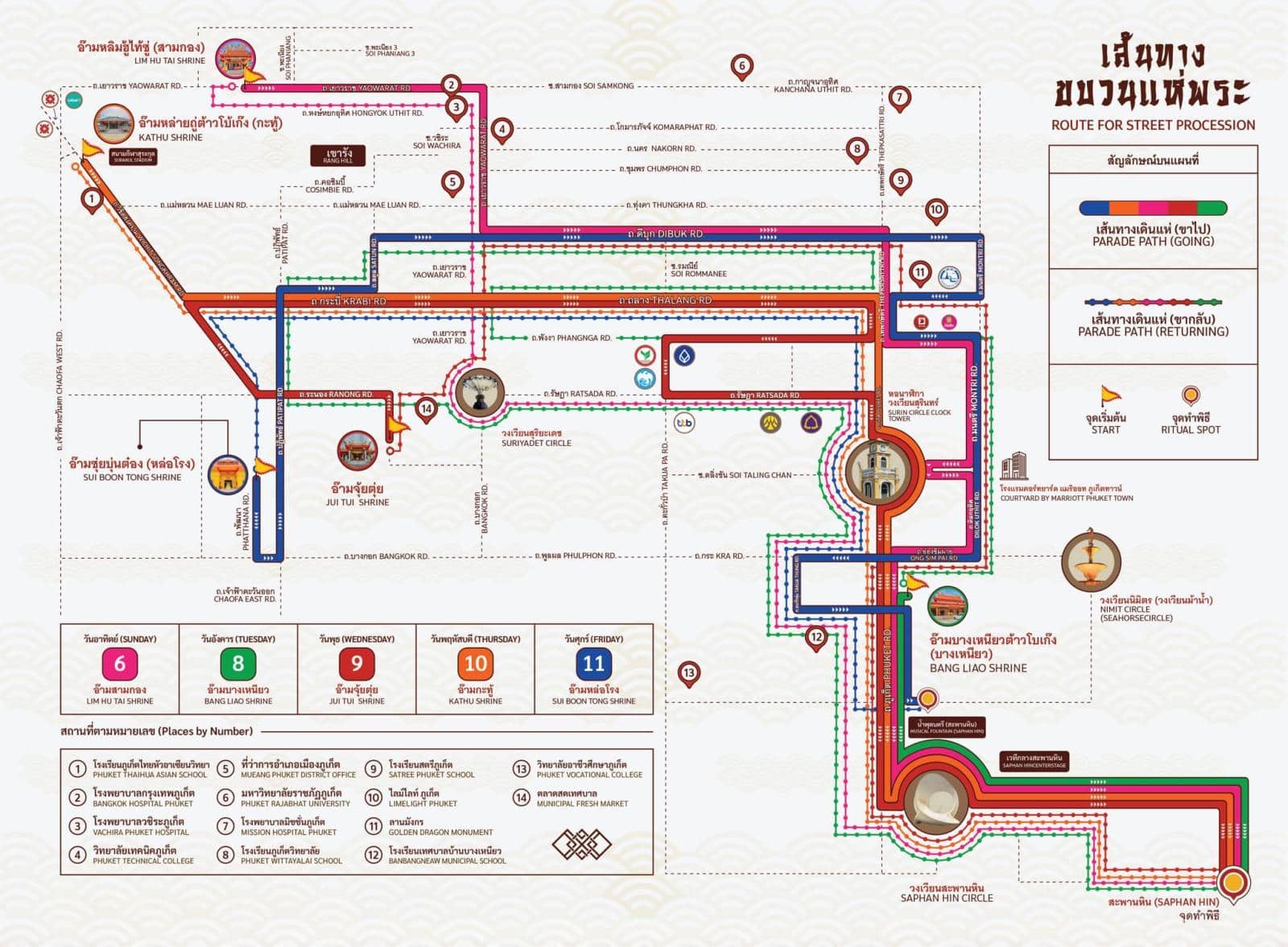
I've stayed in many places around Phuket Town over the years and my location preference is the Eastern end of this map, somewhere near Montri Rd. It's near the bus station, the drop off and pick up point for the convenient airport bus service, and right on the edge of most processions. It's a 10-15 minute walk to both Ranong Rd and Bang Neow Shrine, where you'll find the largest clusters of food vendors (I convince myself I'm getting some exercise in between the 75 meals a day I eat during the festival).
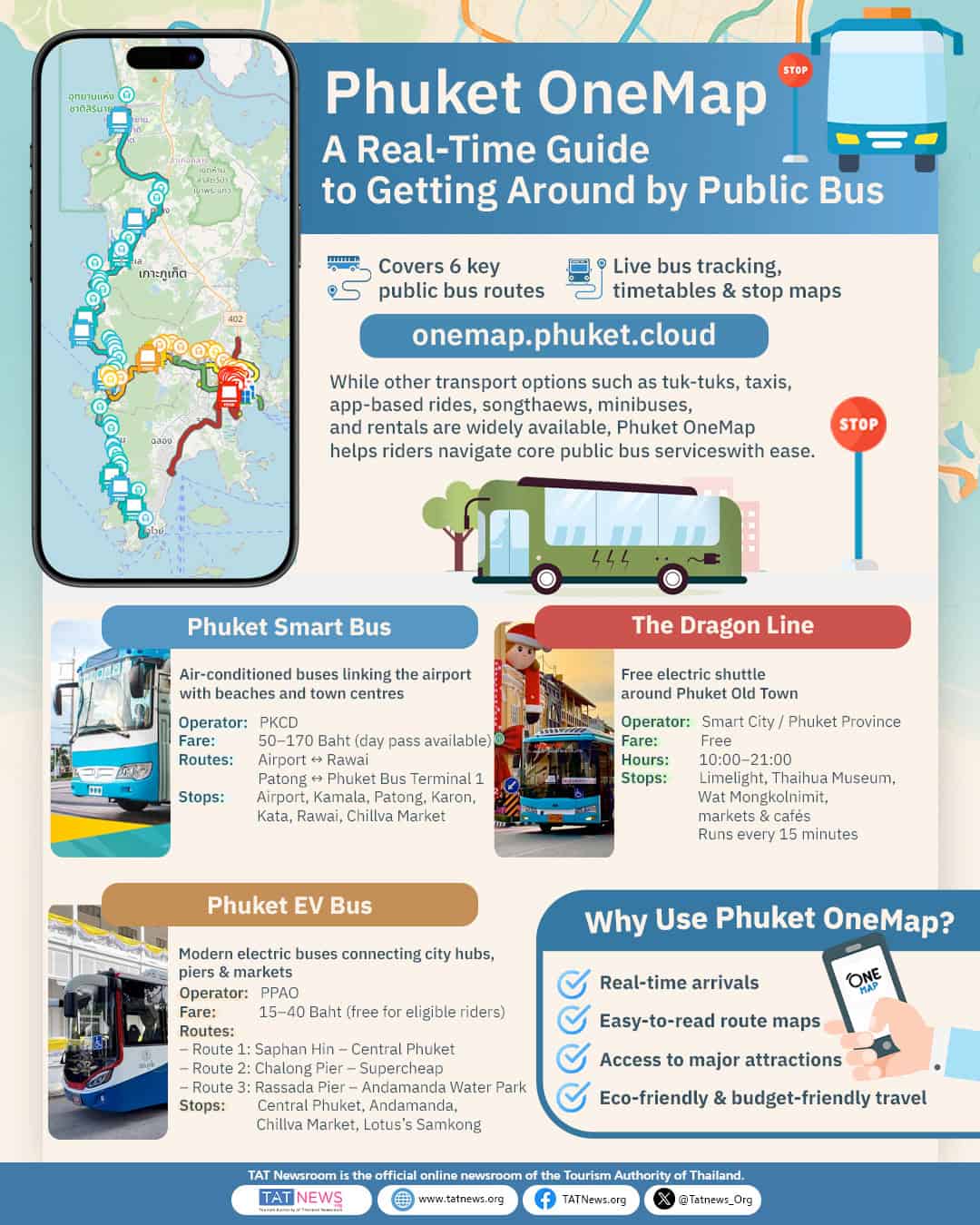
Basically the whole central part of Phuket Town is walkable, and there is also now a free electric shuttle bus around the town, so pretty much anywhere in this area is a convenient place to stay. Check out onemap.phuket.cloud for live tracking of public transport options both in the town and around the island.