Messy Vegan Cook

  • Recipes
  • Thai Food + Travel
  • Supper Clubs
  • Subscribe
menu icon
go to homepage
subscribe
search icon
Homepage link
  • All Recipes
  • Thai Food and Travel
  • London Vegan Supper Clubs
  • About
×
Home » Articles » Thai Food and Travel » Vegan Thai Recipes

Basic Thai Red Curry Paste (Nam Prik Kaeng Kua)

Updated: Jan 18, 2024 · Published: Jan 27, 2020 by Kip · This post may contain affiliate links · 5 Comments

↓ Jump to Recipe

Jump to:
  • ? Basic Vegan Thai red curry paste recipe

Thai curries are not limited in scope to the variegated palette proffered by Thai restaurant menus outside of the kingdom's borders. For instance there is no such single dish called red curry in Thai cuisine. The designation of red curry is instead unspecific and corresponds to a plethora of dishes made with the base ingredient of one of many kinds of curry paste with the inclusion of dried red chillies.

Thai Red Curry Paste (nam prik kaeng kua)
Making curry paste in a granite mortar.

Nam prik kaeng kua is one type of red curry paste. For students of Thai cuisine it is arguably the most essential to learn because it is the foundation of other red curry pastes. Kaeng pet, panang, kari (yellow curry), and choo chee are just a few examples of Thai curries with pastes that contain the same base ingredients as kaeng kua.

Thai Red Curry Paste (nam prik kaeng kua)
Print Recipe

? Basic Vegan Thai red curry paste recipe

Nam prik kaeng kua - พริกแกงคั่ว - is the foundation of all other red curry pastes cooked in coconut cream. For instance the ingredients used in this recipe will also be present in a kaeng phet curry paste as well as in panang curry paste. Nam prik kaeng phet is effectively nam prik kaeng kua with added spices, where the former has stronger Indian and Arab influences. Kua curries tend to be more vegetable focussed and include use in dishes like pineapple curry and kaeng tae po (sweet and sour morning glory curry)
Cuisine: Thai

Equipment

  • Pestle and mortar

Ingredients

  • 8 dried long red chillies
  • 2 dried bird’s eye chillies
  • 1 ½ teaspoons salt
  • ¼ cup thinly sliced lemongrass
  • 2 tablespoons chopped galangal
  • 1 teaspoon makrut lime zest
  • 1 teaspoon chopped coriander root 3 grams
  • 3 tablespoons chopped garlic
  • ¼ cup chopped shallot
  • 1 ½ teaspoons shrimp paste or Korean doenjang

Instructions

  • Slice the long dried chilies lengthways and remove the seeds. Cut into chunks and soak in warm water until soft.
  • Pound the soaked chilies, dried bird's eye chilies, and salt using a pestle and mortar until smooth. Add lemongrass and pound into a uniform smooth paste. Continue pounding each ingredient, one at a time, until smooth.
  • Use immediately or store for up to a few weeks in the fridge (or you can freeze it for longer).
More Vegan Thai Recipes

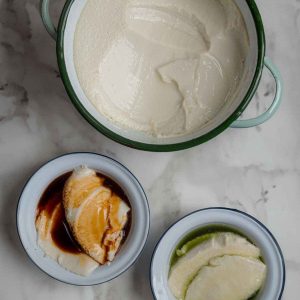
  • Top down view of a large pot with tofu pudding, next to two small bowls with tofu pudding.
    Two-way tao huay: tofu pudding with pandan & Thai tea
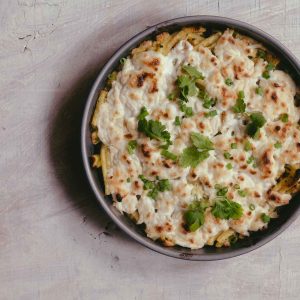
  • Tom kha pasta bake
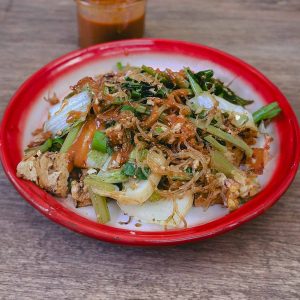
  • Enamelware dish with a red rim filled with noodles and green veg
    Suki Haeng or stir fried Thai suki noodles
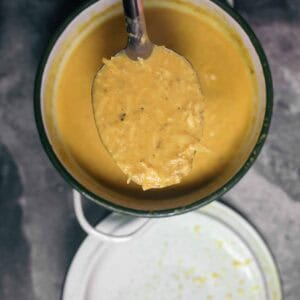
  • A spoon of kanom jeen nam ya curry held above a pot containing more of this textured yellow coconut curry
    Vegan kanom jeen nam ya: Southern Thai mushroom curry noodles

I reserve the right to improve any malicious and trollish comments left below. Please do not comment about nonvegan products or activities.

Comments

  1. B says

    February 15, 2022 at 7:27 am

    Thank you for the recipe.
    Is it possible to substitute red miso for the Korean doenjang?

    Reply
    • Kip says

      February 15, 2022 at 11:11 am

      yup! You can also leave it out and just use more salt if that's easier. Most of the prepackaged vegan curry pastes available to buy in Thailand are made with only salt.

      Reply
    • Chulanapa says

      September 16, 2022 at 6:36 am

      Where do you get hold of your makrut lime? I can’t seem to find any in my local (Bristol) Asian supermarkets? Thank you.

      Reply
      • Kip says

        September 16, 2022 at 8:42 am

        I rarely find it fresh, but sometimes it can be found frozen. For making curry pastes in the UK I typically use a dried lime skin and rehydrate it slightly before use e.g. https://www.raanthai.co.uk/dried-kaffir-lime-skin-50g-grab-thai.html

        Reply
      • David Woodworth says

        January 18, 2024 at 2:55 am

        Hello,
        I get mine from my backyard. Here in Northern California it can live year round, but in other climates you might need a greenhouse. We have had a makrut lime tree in a pot for over 20 years, without any problems. It is only a couple feet wide and three feet tall. Just clip what you need.

        Reply
  2. I reserve the right to improve malicious and trollish comments.

Leave a Reply Cancel reply

Your email address will not be published. Required fields are marked *

Recipe Rating


Name's Kip. Some things about me: vegan, Thai food enthusiast, comfortably chaotic and disorganised, information lover, Londoner, cookbook collector, clumsy AF, rarely takes a serious photo, has never been on a diet. This is not a wellness blog. I run vegan Thai supper clubs too.

More about me ?

  • All recipes
  • Thai food + travel
  • General travel
  • Reviews
  • Food facts
Vegan Thai Recipes
Vegan Travel in Thailand
Kippysnacks logo

I run vegan Thai supper clubs at my home in East London.

Think Like a Vegan

A thoughtful read for long time vegans and nonvegans alike, this is one of the best styles of arguing for and discussing veganism I have yet to find.

Popular posts

  • 5 ice lollies on a dark grey surface
    Pineapple Thai basil ice lollies
  • five vegan cheeseburger dumplings in a bowl. One dumpling is held up with chopsticks to showcase the crispy brown bottom.
    Vegan cheeseburger dumplings

Footer

^ back to top

About

  • About
  • Frequently Asked Questions
  • Privacy policy
  • Relationships and disclosures
  • Comments Policy
  • PR and Review Policy
  • Freelance and Consultancy

Contact

Email me
  • Facebook
  • RSS Feed
  • Instagram
  • Pinterest
  • Twitter

Newsletter

All content on this site, including, but not limited to, text, recipes, and photographs are owned by Messy Vegan Cook and its contributors. No content may be reprinted or reproduced without permission. As an Amazon Associate I earn from qualifying purchases.

Copyright © 2025 Messy Vegan Cook