
When I was in Thailand last year I bought a cheap hand held manual noodle press out of curiosity and today we'll talk about how to make rice vermicelli noodles from scratch using this device.

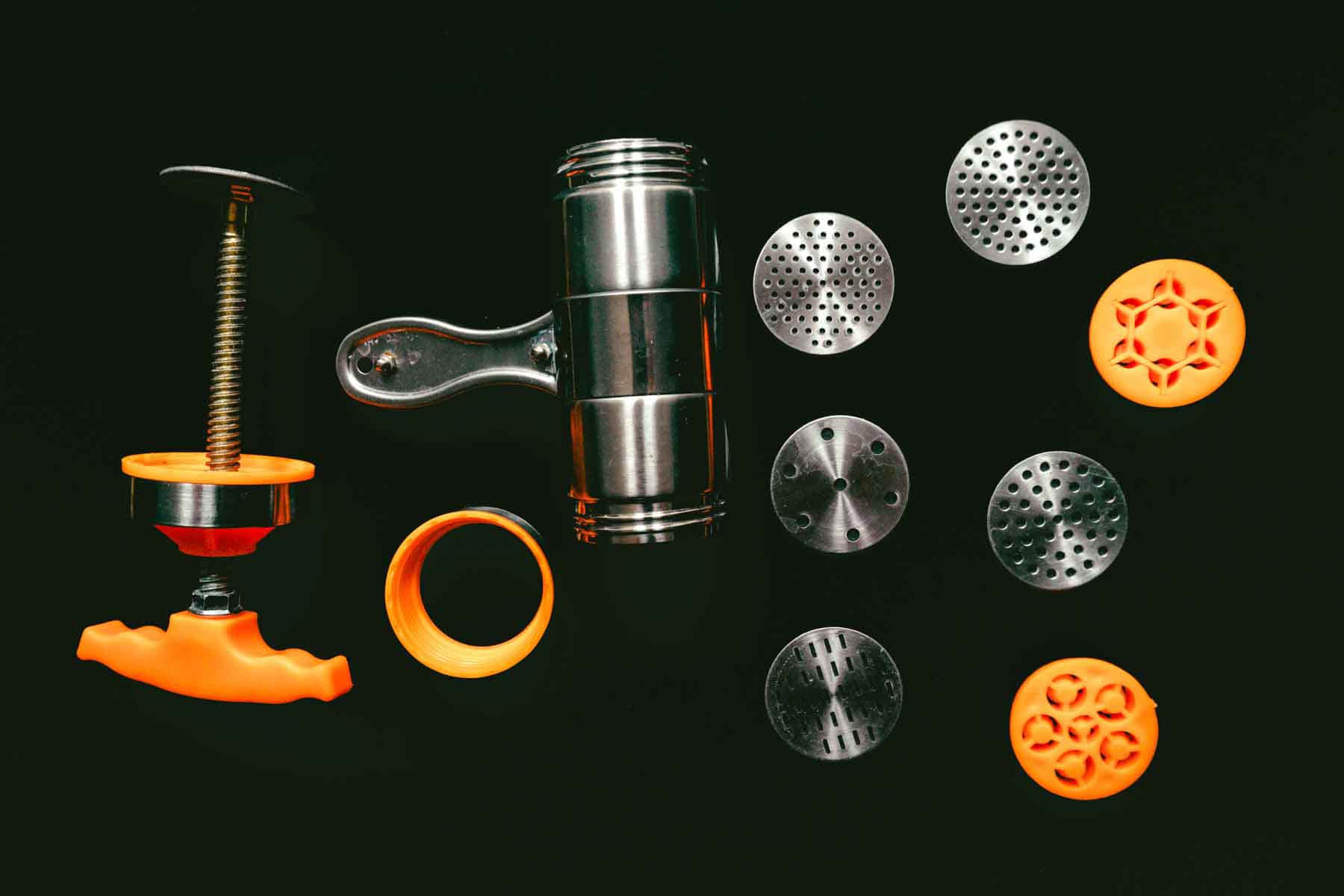
For reference, it's a completely manual stainless steel and plastic press with a rotating knob to extrude the noodles. The kit comes with various sized pressing moulds for different shapes of noodle. Electric pasta and noodle makers also exist, and I assume this recipe will work with such devices.
The problem with making rice noodles is adjusting for brittleness, which is why you'll often find various starches added. This applies with both sen yai/hor fun noodles and extruded rice noodles. I struggled to come up with a decent rice noodle recipe where the noodles had a tensile quality and a good texture until I discovered the 兑兑 Duidui in Finland YouTube channel. With the help of this YouTube video (heads up it has some nonvegan items either side of the noodle-making tutorial), I realised the answer isn't just tapioca starch but also xanthan gum.
My recipe and method is based hugely on the one in the above linked video, so if you're a visual learner then you can follow their video.
How to use a manual noodle press
Blah blah blah here are some pictures
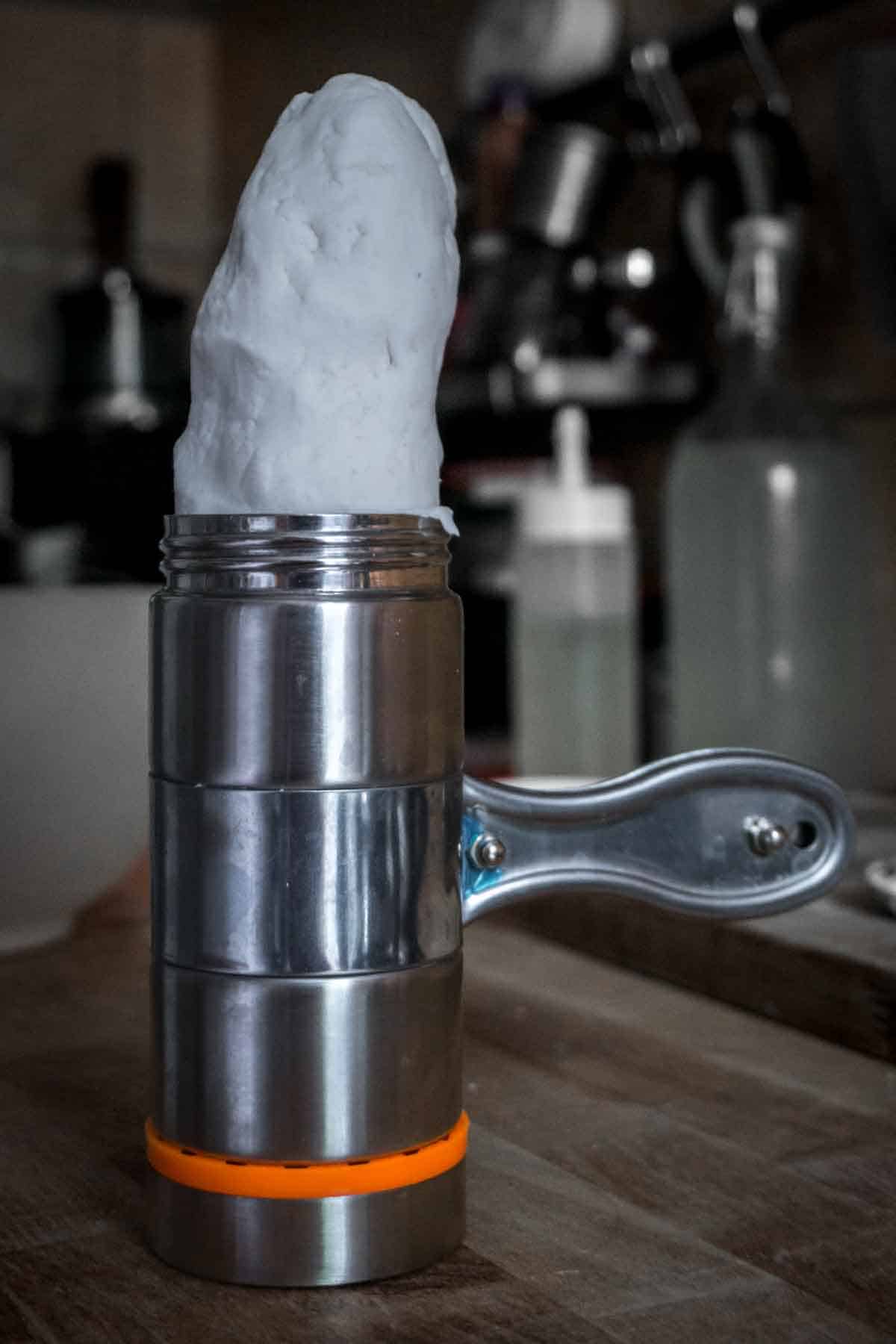
Once you make the dough, roughly shape it to the size of the tube. The quantity of dough fits the tube perfectly.
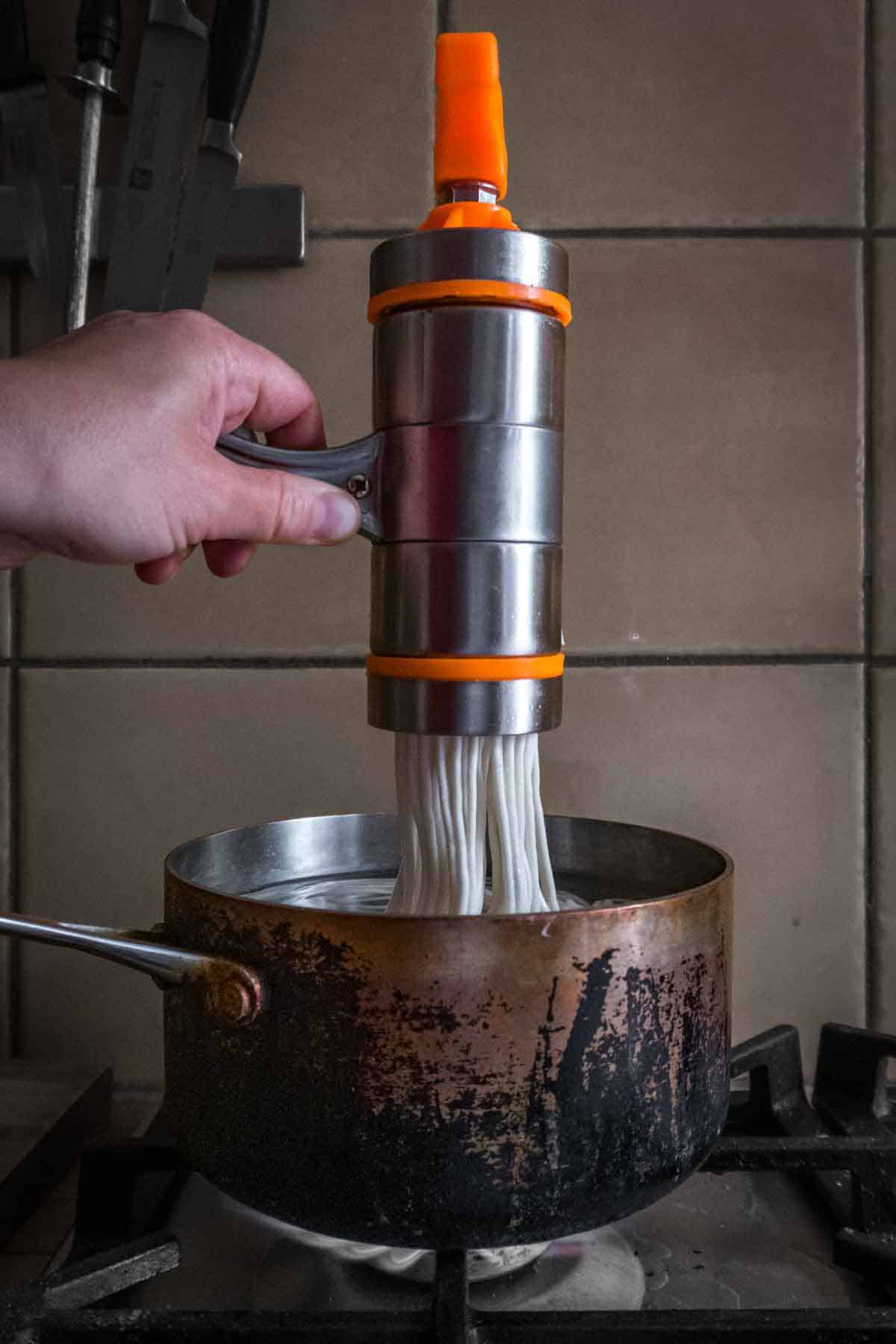
Twist the handle at the top to extrude the noodles into boiling water. Don't do what I did, which is to pause to take a photo of this process.
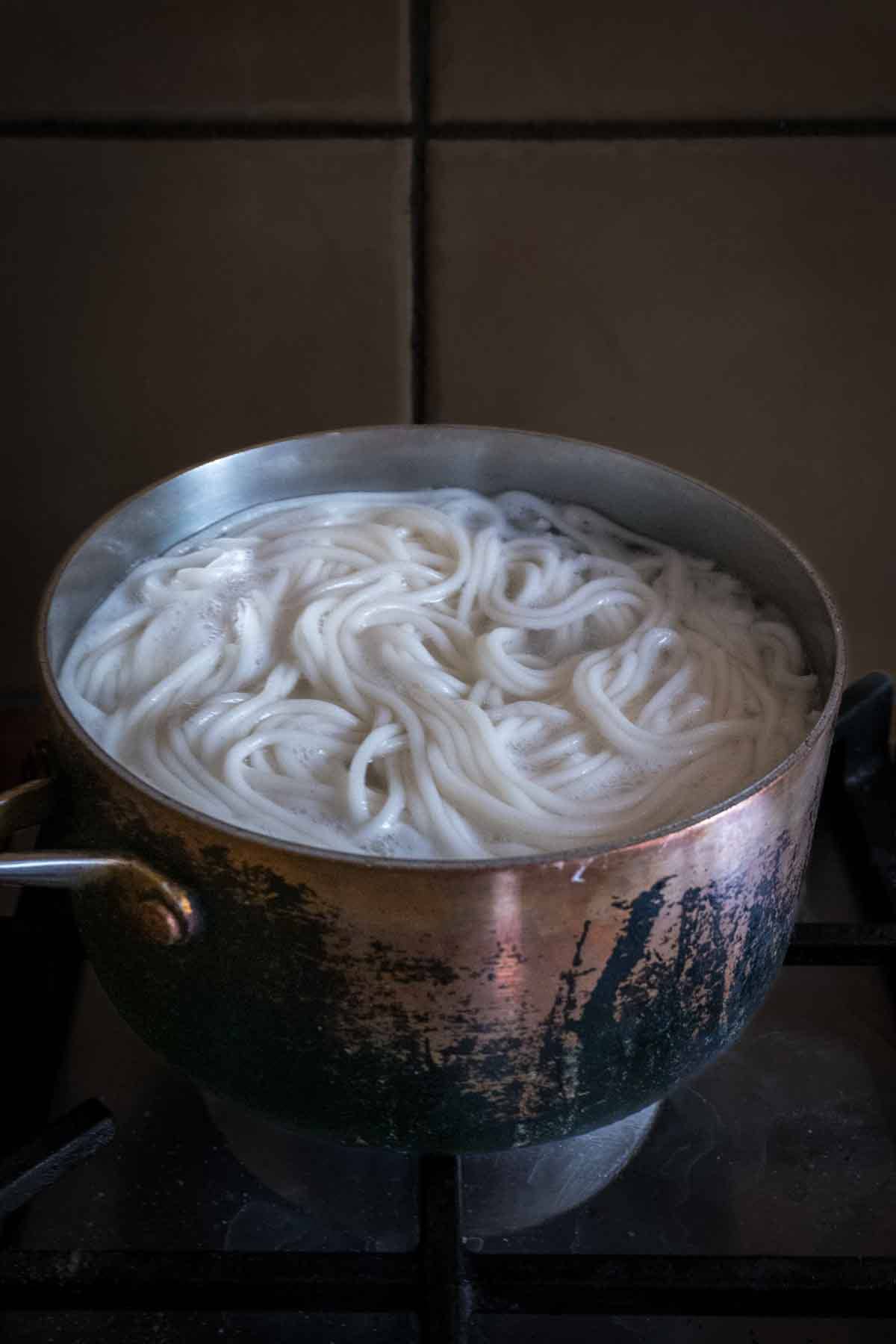
Boil until the noodles float (this will be almost immediate).
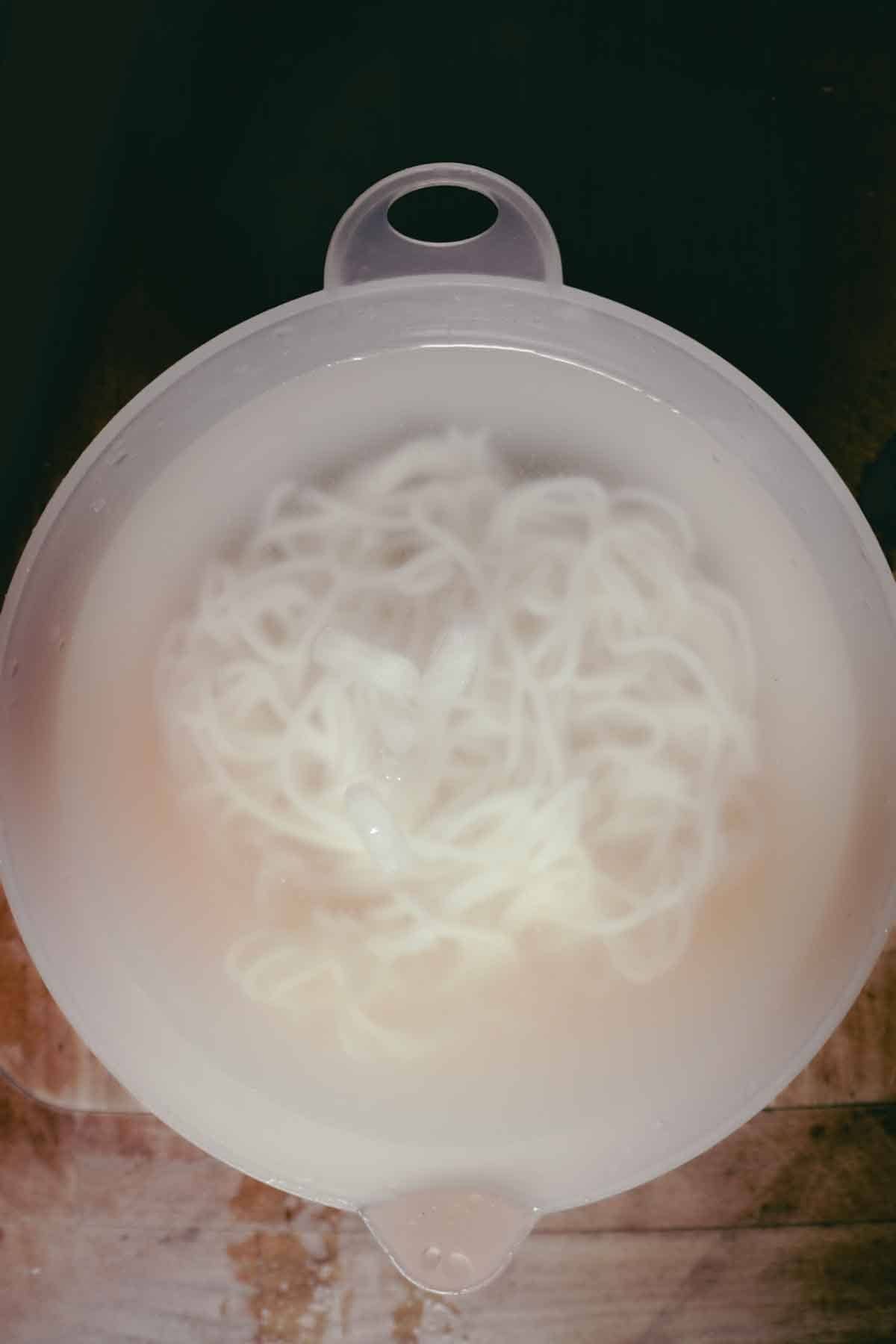
Strain the noodles and immediately add them to a bowl of cold water to cool.
Troubleshooting
That water must be boiling to cook most dried pasta is a debunked theory. But in the case of fresh noodles such as this rice vermicelli you really do need water at a rapid boil. If you don't wait for the water to boil, you'll end up with mushy noodles.
What if some of the strands stick together? The trick to avoiding this is to keep the press a few inches above the water and to move it around as you turn the handle to extrude the vermicelli. Then grab some chopsticks to agitate the strands as they finish cooking. You may find they still stick together, but in the end it doesn't matter. They'll still be cooked and they'll still taste good.
Don't waste time worrying about the remnants of dough at the bottom of the noodle press when you're cooking the noodles. The process moves too quickly and your noodles will go mushy if they're cooked for too long. You can cook that dough later if you don't want to bin it.
Rice vermicelli noodles from scratch with a manual noodle press
Equipment
- handheld noodle press
Ingredients
Cooked base
- 150 millilitres water
- 30 grams rice flour
- 2 teaspoons vegetable oil 10 grams
Noodle dough
- 75 grams rice flour
- 70 grams tapioca starch
- 6 grams salt
- 2 grams xanthan gum
Instructions
- Whisk together all of the cooked base ingredients in a small saucepan. Turn the heat up to medium and cook, stirring regularly, until it thickens into a paste. Scoop it into a large bowl. Leave until it's cool enough to handle.
- Add the noodle dough ingredients to the bowl. Knead with your hands (it's a sticky dough, so don't be alarmed when it sticks to your fingers) to an even dough and shape it so you can slide and press it into the tube for the noodle press. The quantity of dough precisely fits the tube. Choose one of the moulds with multiple round holes.
- Bring a large pot of water to the boil. Hold the noodle press 4-6 inches above the top of the boiling water and begin to turn the knob to extrude the noodles. As they hit the water, move the press around the pot so they're not piling on top of each other (but don't stress about this). When you can't turn the knob any further, dunk the end of the noodle press into the water, lift it out again, then grab a sharp knife or scissors and cut the ends. Cook until noodles float (this is almost instant).
- Carefully drain (they're slightly fragile) and add to cold water to stop the cooking. Drain and use as you'd like.


Shuba says
Hello Kip,
You have a wonderful blog which will become my most-referred to resource for Thai cooking. Thank you for sharing your knowledge.
The fresh, extruded rice noodles is interesting - have you tried steaming the noodles instead of boiling them? I wonder if the type of rice increases the tensile-strength of the noodles without having to add starch to it. Do you think a combination of "regular" rice flour and sticky rice flour might achieve the desired results here? Hard to say without actually trying it out, which is what I am going to do.
Thanks for the inspiration!
Kip says
Hi Shuba, thanks for your kind words 🙂
For me, steaming extruded noodle would be more effort than it's worth (carefully ensuring they don't touch while extruding, trying to handle them by hand individually, and laying them all out with space to not touch so they don't stick together while steaming would take forever). I have made extruded noodles with a combination of rice and glutinous rice flour with reasonable results though. I'm not happy enough with the recipe to publish it, but you should by all means play around! Just know it will produce a noodle that is much more sticky (more akin to Shan style rice noodles).
I reserve the right to improve malicious and trollish comments.